After his exoneration, Jarrett Adams (JD '15) seeks justice for others
Jeff Link · 30 October 2026
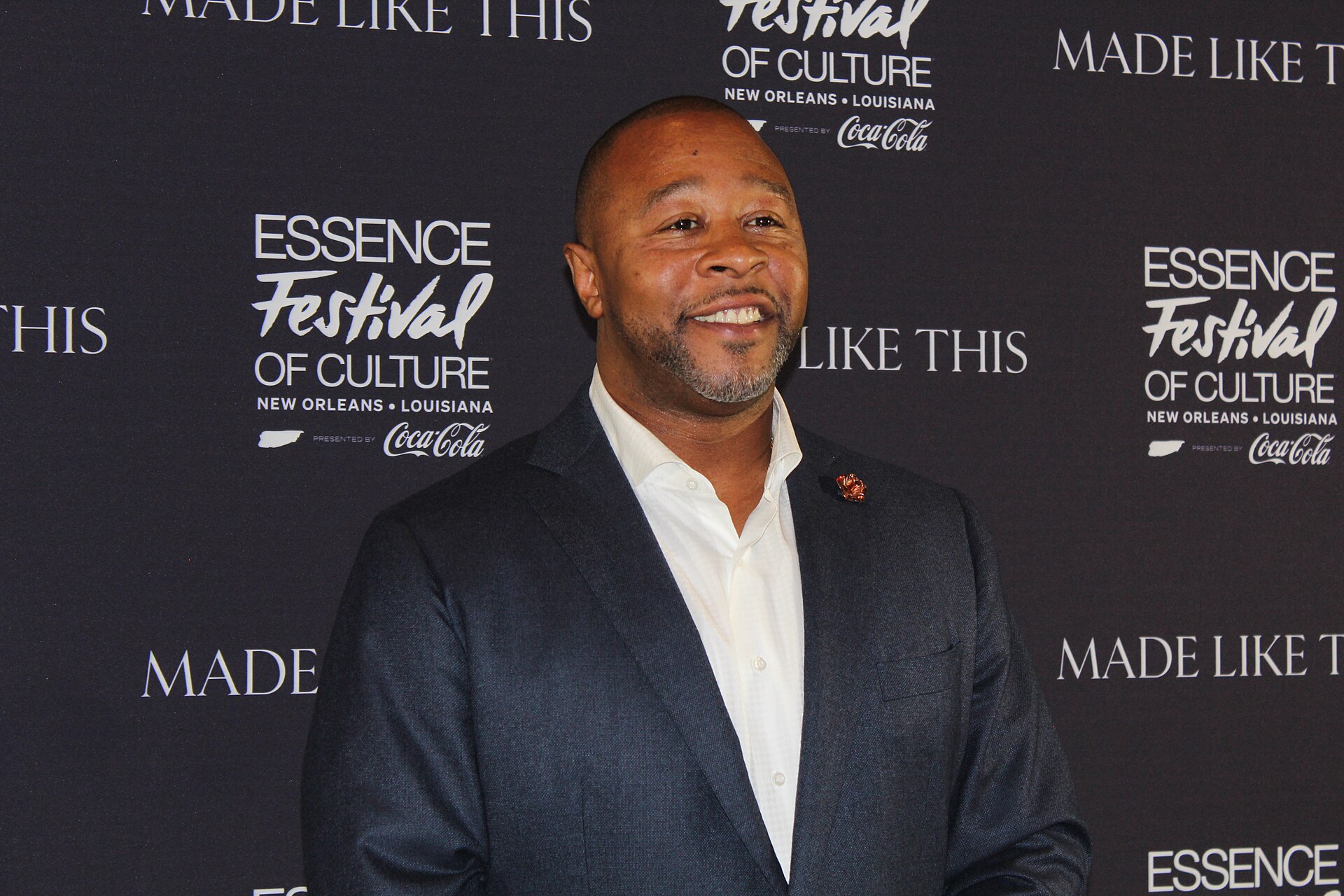
Terence Richardson was playing cards with ‘O’, another inmate at Federal Correctional Institute Petersburg, a medium-security federal prison about 30 miles outside Richmond, Virginia, when O glanced up at the TV.
“Hey, Rich, he’s talking about you,” O said.
Richardson could hardly believe his eyes.
It was January 2025, just days before former President Joe Biden would officially leave office, and a broadcaster was delivering a breaking report. The news was that Biden had commuted Richardson’s life sentence and that of Ferrone Claiborne, his alleged accomplice in the 1998 killing of Allen Gibson Jr., then a 25-year-old officer in the Waverly, Virginia, police department.
Men in the common area began clapping, and some opened their arms to hug Richardson as tears welled up in his eyes. He knew his attorney, Jarrett Adams (JD ’15), had petitioned for his release, but the possibility of being set free had seemed achingly remote.
After nearly 26 years in prison, Richardson’s life was about to change profoundly. In several months, he would reunite with his family—his son, Terrell Edwards, 27, who was just three months old at the time of his incarceration; his daughter, Iquisha Wyatt-Richardson, 33; and a parade of other family members whose lives had grown and changed in his absence. The horrors and indignities he’d experienced in prison—mass lockdowns, gruesome acts of violence, the distant view of factories in nearby Hopewell, Virginia, through his tiny cell window—all of it would soon be behind him.
Claiborne, who also was soon to be released, said much of the credit for the two men’s commutations belongs to Adams, an attorney who stood in their corner and remained zealously committed to defending their claims of innocence. “I’m really thankful to Jarrett for taking the time to actually look over our situation,” Claiborne said, “because that was something we’d been trying to find for years—a lawyer that’s been fighting, and he has that fight. It was a blessing because our stories actually go together so well, his and ours. That’s what makes this whole thing special. He got locked up the same year we did—in 1998.”
And, indeed, Adams’s relentless drive to prove the two men’s innocence stems, in large part, from his own wrongful conviction. The 45-year-old South Side Chicago native, who runs his own practice, the Law Offices of Jarrett Adams, spent nearly a decade in a string of Wisconsin prisons for a crime the U.S. Seventh Circuit Court of Appeals found he did not commit. The apparent legal parallels between his case and Richardson and Claiborne’s are striking and include accounts of evidence suppression, unreliable witness testimony, ineffective counsel, and racism.
“The justice system is supposed to be without eyes, meaning it is intended to weigh facts and legal precedent impartially regardless of identity or appearance,” Adams told me. “In truth, however, justice is frequently a commodity, and the capacity to secure it remains fundamentally uneven, dictated by the intersections of racial identity and financial means.”
Originally published by Loyola University Chicago on 30 October 2026