Another CCRC established … but still not in Australia
Andrew L. Urban · 24 May 2020

A new, independent body that will have the power to send potential miscarriages of justice back to an appeal court is on track to begin receiving applications from July 1, 2020 – but not in Australia. It’s the New Zealand Criminal Cases Review Commission (NZCCRC), leaving Australia behind in dealing with miscarriages of justice, laments former High Court judge Michael Kirby AC CMG.
“What is it about our country that always sees us limping behind UK, NZ and Canada where justice is at stake, whereas we can move with astonishing speed to diminish civil liberties, increase official powers and raise levels of incarceration, with no parliamentarian raising a murmur,” he complained via a Guest Editorial in Criminal Law Journal.

NZ Justice Minister Andrew Little
When NZ Justice Minister Andrew Little sought Cabinet’s approval in 2018 to establish the CCRC, reports newsroom.co.nz, his paper cited long-running concerns about the “independence, timeliness, quality and fairness of investigations into miscarriages of justice under the status quo”. He could have been speaking of Australia in similar terms. Many have, notably Michael Kirby, but others, too, including me and legal academic Dr Bob Moles of Flinders University, who provided constructive suggestions as to how such a body could easily be established in Australia’s legal system. (See below)
As in Britain, where a CCRC has been operating since 1997, the purpose of the NZCCRC is to enable anyone who believes they have suffered a miscarriage of justice to apply – no fees are payable, and they won’t necessarily need a lawyer.
In deciding whether to refer a conviction or sentence, the NZCCRC must have regard to whether the applicant has exercised their rights of appeal; the extent to which the application relates to new evidence or a question of law; and the prospects of the appeal succeeding.
It also has powers to initiate inquiries into matters that may be seen to be common features in cases involving a miscarriage of justice, and it can compel people to produce documents, be interviewed, or examined under oath.
These powers help drag the criminal justice system into the 21st century, and they are based on firm legal principles, enhanced by a robust objective to achieve justice.
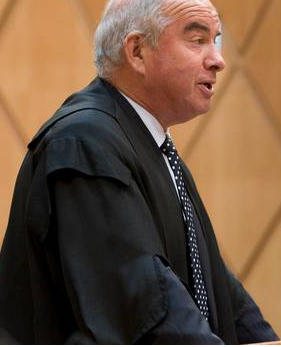
Colin Carruthers QC
The NZCCRC will be based in Hamilton, a decision designed to underline its independence by distancing it from the main bureaucratic and judicial centres of Wellington and Auckland. Colin Carruthers QC will be its chief commissioner. He will head a board of commissioners, whose appointments will be considered by Cabinet this month. At least one member of the board must have knowledge or understanding of te ao Māori and tikanga Māori, at least one-third must be legally qualified, and at least two-thirds must have experience of having worked in the criminal justice system.
ADVICE TO THE AUSTRALIAN ATTORNEY GENERAL
I wrote to Attorney General Christian Porter in March 2019, citing advice prepared by Dr Moles, as follows:

Dr Bob Moles
A national CCRC can be established by setting up a single CCRC and then each state and territory can legislate to nominate that CCRC as the appropriate agency to review cases on its behalf and exercise powers given to the CCRC by that state to refer matters to the appeal court of that state. This would not involve any constitutional change of any sort.
In essence, instead of duplicating the overheads of a CCRC eight times by having one in each state, we save resources by having a single body exercising the appropriate powers for each state and territory.
I know that there are some who take the view that getting states to cooperate is a highly challenging and they may well be right on that, but I think it should nevertheless be a strategic goal, both from the point of view of economy, but also from the point of view of ensuring independence of the review process.
Australia has a single unified legal jurisdiction which is why we have a common Supreme Court (the High Court). To have a single administrative body which can exercise powers on behalf of each state and territory, being cognisant of the minor variations in the law which may occur between them, would be administratively simple and have strategic and economic benefits.
It should be noted of course that according to the AHRC, the criminal appeal system in all states and territories failed to comply with international human rights obligations. It failed to respect the right to a fair trial and to ensure an effective appeal. South Australia and Tasmania have legislated to remedy that defect. The remaining states and territories have not done so. It is of course the responsibility of the Federal Attorney-General to ensure compliance with International Treaties.

Australian AG Christian Porter
AG Porter has so far declined to consider the establishment of a CCRC in Australia. He has not given a reason for his decision.
FOOTNOTE:
The CCRC in the UK started work in April 1997. Between then and the end of March 2020 it has:
- Referred 692 cases to appeal courts
- Of the 670 cases where appeals have been heard by the courts, 450 appeals have been allowed and 207 dismissed
- 519 cases are currently under review at the Commission and 170 are awaiting consideration.
Since starting work in 1997, the CCRC has so far received 26,221 applications (including all ineligible cases) and completed 25,531 cases.
Originally published by Wrongful Convictions Report on 24 May 2020