With sex abuse allegations, some priests wonder: Will I be presumed innocent until proven guilty?
Kevin Clarke · 10 September 2026
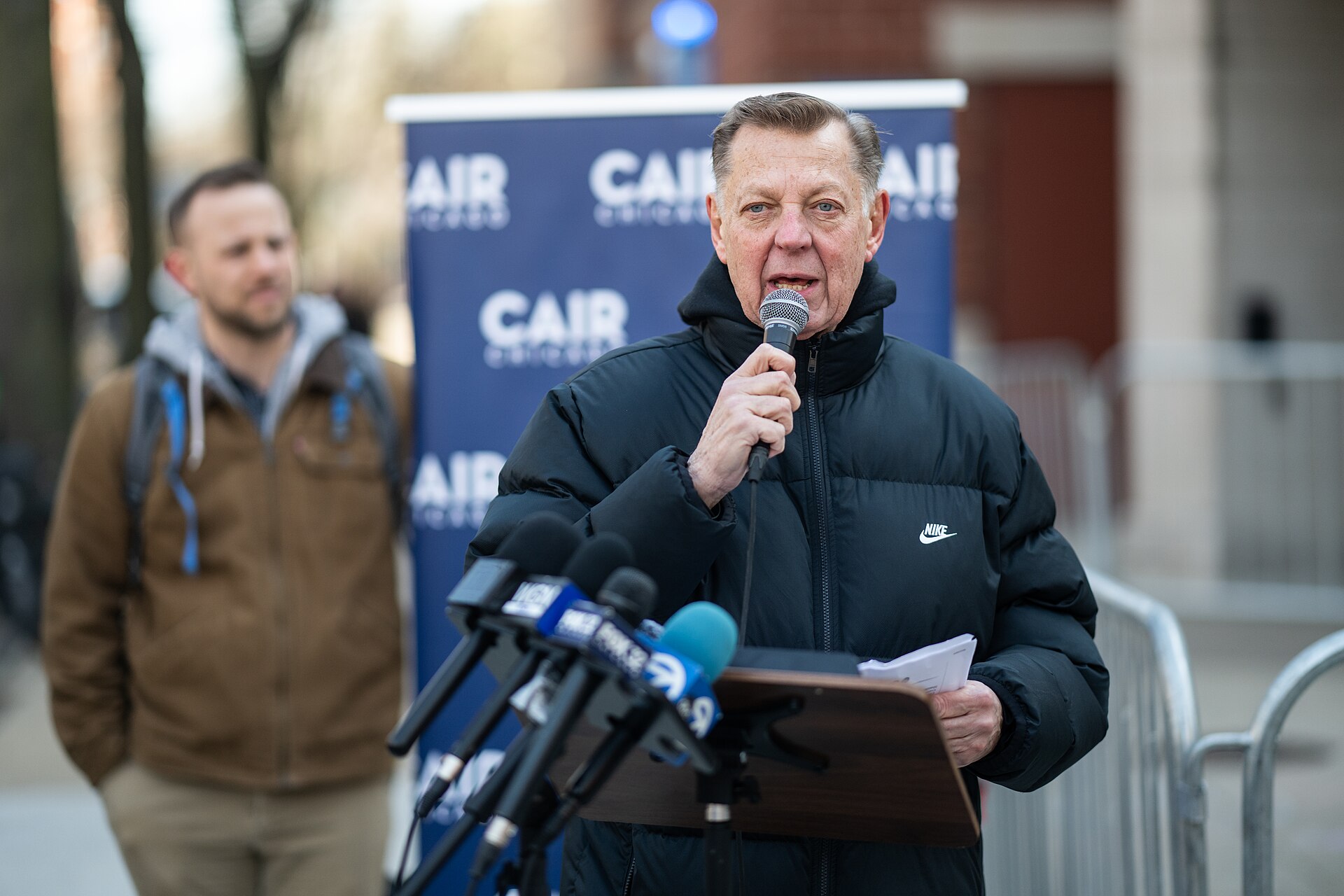
More than 20 years after the abuse crisis first roiled the U.S. Catholic Church, the response this summer from one accused priest was dramatic and unprecedented. Father Michael Pfleger, the at-times controversial leader of a South Side Chicago parish, fiercely objected to an archdiocesan letter that disclosed the allegation of a decades-old incident of sexual assault on a child.
“Let me be clear, sexual abuse is wrong and I realize that the Catholic Church has a long history of not dealing with accusations and has spent a number of years putting strong policies in place, but I have said countless times I believe the current policy is wrong and unfair to the accused priest,” Father Pfleger wrote on July 11, responding in a statement to media the same day his suspension from ministry at the Faith Community of St. Sabina was announced.
Father Pfleger acknowledged that the process established by the Archdiocese of Chicago to deal with accusations of abuse required him to silently accept his removal from ministry until an investigation was concluded. “But at this point,” he wrote to his parishioners, “I will no longer be quiet…. I will not stand by and allow my name, my ministry, and the church I pastor to be slandered or defamed.”
He charged that the “presumption of innocence does not exist for priests.”
Father Pfleger’s outrage was shared by many of his parishioners, who called for “immediate and comprehensive reform” of the archdiocesan review board process in an open letter to Cardinal Blase Cupich, archbishop of Chicago. The accusation made public in July was the fifth lodged against Father Pfleger in recent years.
Though they have perhaps not been made as passionately before, Father Pfleger’s criticisms are not exactly new. Many have made similar critiques of the mandated review process since the “ Charter for the Protection of Children and Young People ” (known informally as the Dallas Charter) was first enacted in 2002. The norms outlined in the charter were intended to codify the U.S. church’s handling of what was then a metastasizing crisis.
More data, fewer anecdotes
Kathleen McChesney, a former F.B.I. agent and official, led the U.S. bishops’ newly created Office of Child Protection in 2002; she helped coordinate a study conducted by researchers at John Jay College of Criminal Justice in New York that first mapped out the U.S. clerical abuse crisis in 2004.
Ms. McChesney is hesitant to consider policy changes based on scattered reports of erroneous allegations, as harmful as those instances may prove. Hard evidence from a contemporary, comprehensive study, she suggests, would help make a more convincing call to procedural reform.
The bishops’ messaging has improved greatly since 2002, she says, and the Archdiocese of Chicago in particular has established firm and reliable procedures in receiving and evaluating accusations of abuse. What she perceives happening broadly across the country, especially now that fewer new abuse claims are surfacing, may be the best the church can achieve “for now,” especially while keeping foremost the trauma and restoration of survivors of abuse.
Any system can be improved, Ms. McChesney says, but “you have to do the research on how cases are being handled canonically and how they have been handled since 2002—what’s gone right, what’s gone wrong? I just don’t see that [happening now].”
“What I see is more anecdotal. ‘Well, this particular priest was wrongly accused and it all went bad,’ or the opposite—‘This priest wasn’t handled appropriately.’”
Ms. McChesney may not have to wait too long for the empirical evaluation she seeks. John Jay criminologists and researchers at the Center for Applied Research in the Apostolate (CARA) at Georgetown University are currently working on an updated, comprehensive evaluation of the crisis and the church’s response that might offer indications of what adjustments to best practices would be worth considering.
Karen Terry, a John Jay professor and principal investigator for two previous reports on the clerical abuse crisis in 2004 and 2011, told America in an email that she expects the report’s publication by the end of 2026. According to Ms. Terry, this latest analysis will focus on reports of abuse that surfaced after 2010 and how the church responded to them. She said the study is being conducted in cooperation with the U.S. Conference of Catholic Bishops but has been funded by an anonymous source.
Clarity, consistency, transparency
It is true that priests, not only in the United States but around the world, may feel that they have been treated unjustly as investigations against them get under way, Hans Zollner, S.J., says, adding that what a falsely accused priest experiences is “heavy stuff to bear.”
Father Zollner is a theologian, psychologist and a professor at the Gregorian University, where he leads the Institute of Anthropology. He served for almost 10 years on the Pontifical Commission for the Protection of Minors before resigning in 2023 and is considered one of the church’s leading experts on child protection and the prevention of sexual abuse.
“I think we pay a price now as priests in this situation, when you can easily be the target of a false allegation because for decades, for centuries, the church has not acted according to her own law and has not taken appropriate measures,” he says.
In the past, he acknowledges, the testimony of victims of abuse “unfortunately [had] not been taken seriously, and I can tell you in some parts of the world, I hear that they are not taken seriously sometimes [even now].”
The church has learned the importance of pastoral care and psychological support for survivors of clerical abuse, but accused priests “also need to be helped in their physical, psychological and spiritual situation, which is very, very challenging,” Father Zollner says.
Achieving that degree of pastoral balance is no easy task. It needs to be clear that within dioceses and religious provinces, “there is no playing around with allegations,” he says. “We need to take them seriously.”
“I think it is very understandable that priests like Father Pfleger, or others in similar situations, feel pretty unjustly and unfairly [treated],” Father Zollner says. “But the question is, how can the process best be managed and what would be the alternative to such a process?”
The U.S.C.C.B. attempted to address what some perceive as an imbalance in the treatment of accused priests by revising the Dallas Charter this summer. The conference committed the church to “act on the presumption of the sincerity of those who bring forth a complaint of sexual abuse” while also adding “a corresponding presumption of innocence on the part of the accused until guilt is proven.”
Some worry that the change could have a regrettable effect.
Sara Larson, executive director of Awake, a survivor support and advocacy organization based in Shorewood, Wis., said the church should be mindful that survivors of abuse are not discouraged from speaking out about what happened to them.
“Many important changes have been made to improve child protection, strengthen reporting processes, and respond more compassionately to those who come forward,” she said in a statement emailed to OSV News.
“At the same time,” she wrote, “many survivors continue to tell us that they did not feel heard, believed or treated with dignity when they disclosed their abuse to church leaders, and that the reporting process was painful and retraumatizing.”
How many priests have been erroneously or fraudulently accused? That figure is difficult to ascertain.
In January 2025, CARA released a summary of 20 years of data collected from U.S. dioceses, eparchies and religious communities of men that reported 16,276 credible allegations of abuse of minors by priests, deacons and religious brothers.
In the first years of its survey, CARA tracked two category choices of abuse allegations—those determined by church officials to be “credible” and those determined to be “unsubstantiated/obviously false.” According to those categories, between 2004 and 2015, 82 percent of accusations were reported by dioceses, eparchies or religious orders as “credible” and 18 percent as “unsubstantiated/obviously false.”
Responding to feedback from church officials, CARA researchers added a new category in 2016: “unable to be proven.” The addition was meant to break out what the CARA researchers described as “many new allegations for which limited information was known and a thorough preliminary investigation was unable to occur.”
Following that category addition, surveys from 2016 to 2023 found that 55 percent of allegations were deemed “credible,” 14 percent “unsubstantiated/obviously false” and 31 percent “unable to be proven.”
Somewhere within that 45 percent are likely many instances of false accusations. The Archdiocese of Chicago has in recent months been struggling to recover settlements made to a group of claimants who had participated in a jail-house conspiracy to lodge fraudulent abuse claims.
In his criticism of the process, Father Pfleger suggested that it would be more just for accused priests not to be named or suspended until a review board has completed its investigation and reached a decision. Father Zollner flatly rejects that notion.
“I would feel incapacitated to minister publicly if I were accused of something,” he says. The church also needs to send a strong message, he adds, that allegations are taken seriously to avoid further harm to other possible victims of clerical abuse.
At the same time, “care for the good name of the priest should be kept in mind as much as possible,” Father Zollner says. And at the conclusion of an investigation “a public reinstatement and a clear message from the bishop or the provincial … is the best [outcome] that can happen to a priest because then there is no cloud of doubt hanging around his head when he goes back.”
“We have had cases here in Germany where priests were reinstated, and it was not clear that the investigation was properly conducted, and nobody was going to trust this person.”
In a letter to St. Sabina’s parishioners on Aug. 24, Cardinal Cupich reinstated Father Pfleger, explaining that the latest allegation had been “thoroughly reviewed” and found unsubstantiated.
Originally published by America Magazine on 10 September 2026