Convicted of a murder he did not commit, Fred Steese struggled after prison
Noble Brigham · 28 September 2026
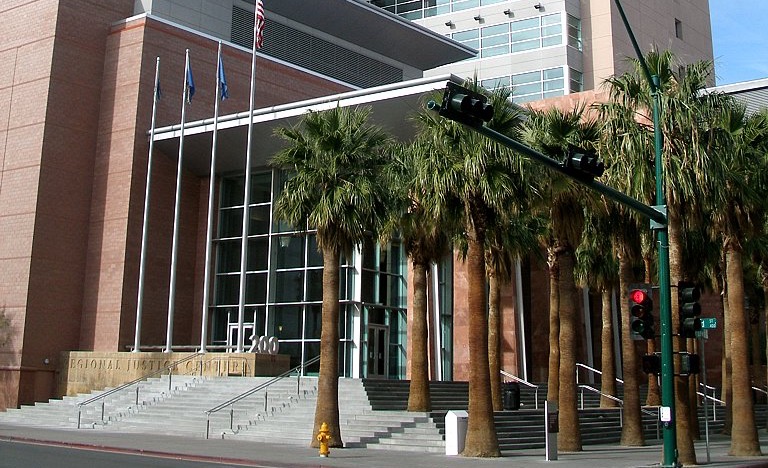
Multiple Las Vegas judges declared that Fred Steese was innocent. One approved a roughly $1.4 million settlement payment to him after Nevada authorities issued a pardon.
For a man who had once faced the death penalty for a 1992 murder he did not commit, those were monumental victories.
But Steese’s life after prison was troubled.
His sister and attorney think he spent the settlement money. He struggled with bouts of homelessness, battled substance abuse and sometimes was used by people who took advantage of his trusting nature, his sister said.
Steese died last month. He was 62 and suffering from pancreatic cancer that had metastasized to his liver, according to Lynn Myers, his older sister.
The events of Steese’s case influenced the careers and beliefs of those involved.
They led to allegations of prosecutorial misconduct.
They left the victim’s sister searching for answers about what really happened to her brother.
They led now-Clark County Public Defender Nancy Lemcke, who represented Steese at trial as a young lawyer, to abandon a planned career in business law and become a public defender.
“While I believe that our system is without question the best in the world, I learned that it’s not infallible,” she said.
Trial and innocence finding
Steese was convicted in 1995 of the fatal stabbing of Gerard Soules, a 56-year-old former trapeze artist who ran a dog show at Circus Circus.
At trial, Steese’s attorneys presented an alibi defense: that he was in Idaho at the time of Soules’ death, according to a 2012 innocence order signed by then-District Judge Elissa Cadish.
The prosecution argued that the person in Idaho was really Fred Steese’s brother Robert Steese, who lived in Texas and would testify in 2011 that he knew nothing about what Fred Steese was doing at the time of the killing, the order said.
Cadish’s order said that there was strong evidence contrary to the claim Robert Steese was the person in Idaho at the time. Evidence “establishes a well-documented alibi proven by multiple consistent and reliable sources,” the judge found.
Steese was prosecuted by Bill Kephart, who became a District Court judge, and Doug Herndon, now the chief justice of the Nevada Supreme Court.
A homeless drifter who had stayed with Soules until shortly before his death, Steese was in Indiana when North Las Vegas police contacted him after a letter for him arrived at Soules’ trailer. Steese returned to Nevada and confessed to the murder after giving multiple different versions of what happened.
Cadish’s order raised questions about the confession, noting that Steese had a low IQ and provided contradictory accounts.
Steese had faced the death penalty, but agreed to a life without parole sentence following jurors’ guilty verdict.
After the trial, defense attorneys argued that prosecutors had unlawfully withheld exculpatory evidence and intimidated witnesses. Prosecutors denied that they had committed any misconduct and at the time, Steese’s claims were unsuccessful in winning him a new trial.
Cadish’s order noted that much of the new evidence presented before she made the innocence finding “became available to the defense as a result of the Court’s May 2011 order authorizing discovery of the district attorney’s file.”
Despite Cadish’s finding that he was actually innocent, Steese made an Alford guilty plea to second-degree murder to gain his freedom. An Alford plea allows a defendant to maintain innocence while acknowledging prosecutors could prove their case.
Steese was pardoned in 2017. In 2021, District Judge Jasmin Lilly-Spells signed off on his settlement with the state and a certificate of innocence.
Originally published by Las Vegas Review-Journal on 28 September 2026