Short Cuts: Rejected Appeals
Matt Foot · 24 September 2026
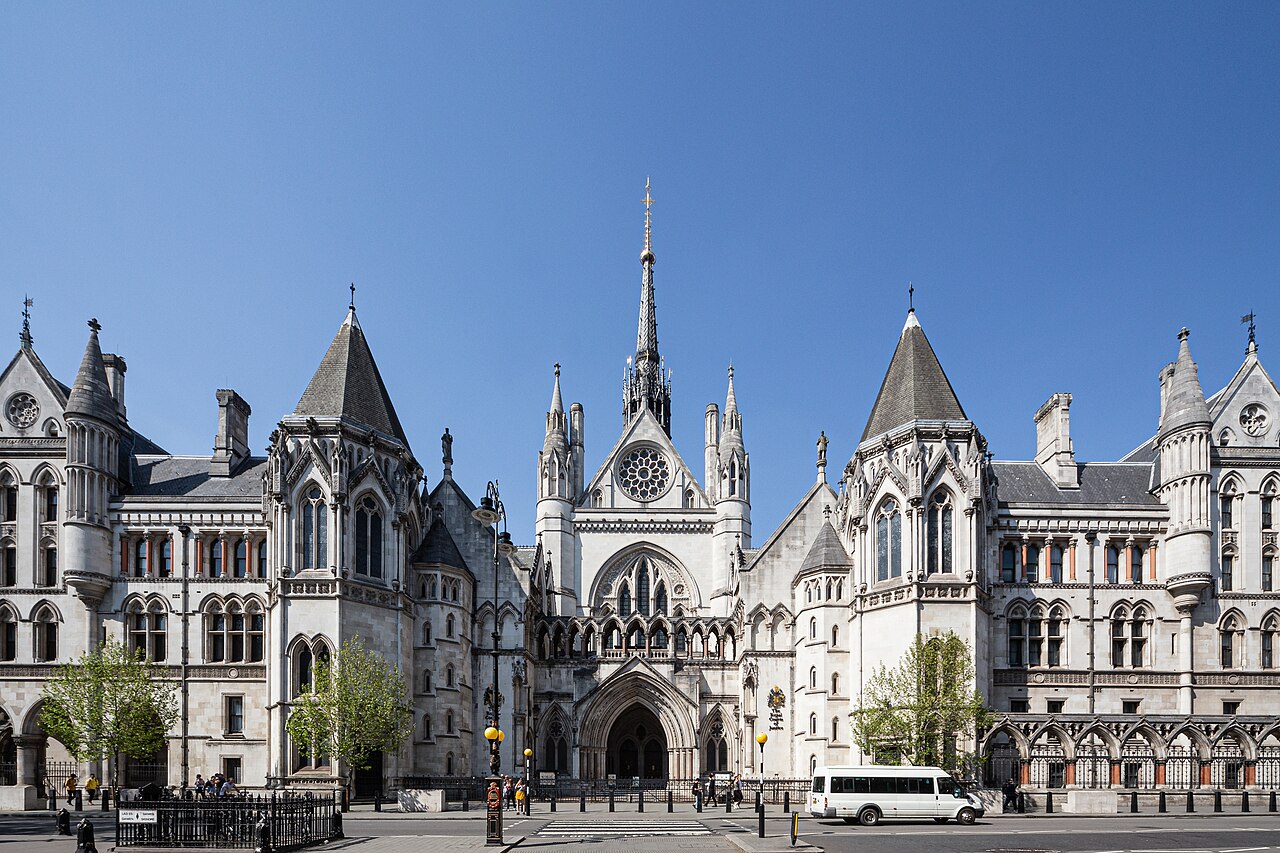
When David Lammy and Sarah Sackman, justice ministers in Keir Starmer’s government, tried to justify their attempt to reduce the number of cases tried by jury, they always praised ‘our judges’. The suggestion was that defendants would suffer no real disadvantage in losing the right to be tried by their peers (it’s not clear whether Andy Burnham’s government will proceed with these changes). Fifty years ago, J.A.G. Griffith argued in Politics of the Judiciary that senior judges were not entirely impartial. They were predominantly in late middle age, white, male and educated at public schools, a background that meant they had a conservative bias and would tend to favour the state over trade unions or protesters. Not much has changed. Griffith died in 2010, but he would probably be unsurprised that the Sutton Trust report Elitist Britain 2025 found that 75 per cent of senior judges (those who sit in the High Court or Court of Appeal) studied at Oxford or Cambridge, an increase from 71 per cent in 2019.
The justice ministers’ view of judges also betrayed their lack of experience in the criminal courts. Writing in 1999, the criminal defence barrister Keir Starmer took a rather different view. In the concluding remarks to a collection he edited with Clive Walker, Miscarriages of Justice, he complained about the Court of Appeal judges:
For years the criminal justice system had been propped up by complacency and arrogance. And, as it was, no apology attended the release of the Birmingham Six, and no expressions of shame came from the bench that our system had so profoundly failed these people. Whatever the failings of the system, the judiciary and legal profession clearly did not feel that they had any accounting to do. Far from being humbled by these experiences, there are still members of the judiciary who are resentful and angry that they have come under scrutiny at all.
One of the Birmingham Six, Paddy Hill, put it more succinctly: ‘Our criminal justice system is probably one of the best in the world. It’s not the system that’s wrong. It is the bastards who sit on the bench who are indoctrinated into preserving the status quo.’ Lord Denning, who presided over a civil action against the West Midlands Police brought by the Birmingham Six, later complained that if they had been hanged ‘we shouldn’t have all these campaigns to get them released.’ The Court of Appeal judges include among their relatively small number many who acted for the state as barristers, some in cases that proved to be miscarriages.
Wrongful convictions caused a public outcry in the late 1980s and 1990s, but they still occur. Over the last few years the Court of Appeal has quashed the convictions of defendants who spent even longer in jail than the Birmingham Six (sixteen years) and Guildford Four (fifteen years). In July 2023, Andrew Malkinson’s conviction was quashed after he had spent seventeen years in prison for rape, when DNA evidence showed that the crime had been committed by somebody else. A year later, Oliver Campbell’s conviction for murder and conspiracy to rob a shopkeeper was quashed. He had been convicted 34 years earlier, spending eleven years in prison and the rest out on licence. Campbell, who suffered a severe brain injury as a baby, had made a confession during the eleventh of fourteen police interviews, some of which were conducted without his solicitor present. The Court of Appeal quashed his conviction on what it called a ‘narrow’ basis – ‘disquiet’ caused by fresh evidence about Campbell’s mental state when he made his confession.
Last year, Justin Plummer’s murder conviction was quashed, after he had spent 27 years in prison. Plummer, bizarrely, had been convicted twice for the murder of Janice Cartwright-Gilbert. The first conviction, in 1998, was overturned in 2021. In 2023 he was convicted again, following a retrial relying on Plummer’s supposed confession to a cellmate, Christopher Dunne, before his first trial. Dunne, who died in 1999, had schizophrenia and was a police informant. Plummer’s conviction was finally overturned when the Court of Appeal ruled that the cellmate’s claim shouldn’t have been put before the jury (it hadn’t been part of the original trial because Dunne wasn’t thought a reliable witness).
In May last year, two months before Plummer’s final exoneration, the court dealt with the longest-serving victim of a miscarriage of justice that I’ve come across. Peter Sullivan spent 38 years in prison after being convicted in 1987 for the rape and murder of Diane Sindall. As in Malkinson’s case, new DNA evidence proved his innocence.
What is striking about these cases is that the Court of Appeal had previously heard the men’s appeals and rejected them – the first three within less than three years of their conviction. In the written judgments for Malkinson and Plummer’s cases, the reason for the rejection of the earlier appeals is not mentioned at all. The court tends to focus (rather like the Criminal Cases Review Commission, the body set up to deal with miscarriages of justice) on the ways it might refuse cases rather than on the prevention of future injustices. In all four cases new evidence had come to light since the initial appeals, but you would still hope that the court might register some concern at its failure to resolve these cases when they were first brought before it. Instead, it was unwilling to apologise or find itself at fault. The Court of Appeal’s sometimes lengthy written judgments show no interest in drawing wider lessons or considering what went wrong and who was responsible. This is distressing for the individuals concerned. They know more than anyone about the failures that led to their incarceration, but there is no attempt to remedy those failures.
Originally published by London Review of Books on 24 September 2026