Fontenot's motion to suppress confession denied
Randy Mitchell · 11 November 2026
A district judge recently denied a request by the defense in the case “State of Oklahoma v. Karl Fontenot” to suppress Fontenot’s confession as involuntary.
Fontenot, now 62, along with co-defendant Tommy Ward, was twice convicted for the 1984 kidnapping and murder of Donna Denice Haraway, a 24-year-old store clerk and aspiring schoolteacher.
Ward, while being interviewed by law-enforcement agents in October 1984, reportedly confessed to robbing the store and kidnapping and killing Haraway. He later recanted and said the confession was coerced and based on a dream he had.
However, during the confession, Ward implicated Fontenot and a third person as accomplices.
Fontenot, then 20, was brought in soon after and, during an interview, also confessed after reportedly being told about Ward’s confession. However, Fontenot recanted his confession shortly after giving it.
A federal judge in 2019 vacated Fontenot’s conviction, and Fontenot was released from prison. He remains free, pending the results of a third trial.
In his 139-page opinion, federal District Judge James H. Payne said Fontenot’s confession (and therefore, Ward’s) lacked any corroborating evidence. Ward had indicated that he and his accomplices robbed McAnally’s, kidnapped Haraway, raped and then stabbed her to death.
Additionally, Fontenot reportedly told police the body had been burned and buried near an Ada power plant.
However, Haraway’s skeletal remains were found near Gerty in 1986, after Ward and Fontenot were convicted the first time, and the medical examiner found a bullet hole in the back of her skull, which was the only evidence of a probable cause of death.
Additionally, there was no direct or circumstantial evidence connecting Fontenot to the crime, according to Payne. Payne also cited three boxes of evidence that turned up in 2018 after the Ada Police Department moved to a new facility.
Payne said the discovery of the “new evidence,” which contained documents that would have corroborated Fontenot’s alibi concerning his whereabouts the night of April 28, 1984, the night Haraway disappeared, were never provided to the defense.
Additionally, Payne called Fontenot’s confession “unsubstantiated,” and indicated that due to Fontenot’s “mental and psychological impairments,” he was susceptible to suggestion and therefore could be easily coerced into making a false confession.
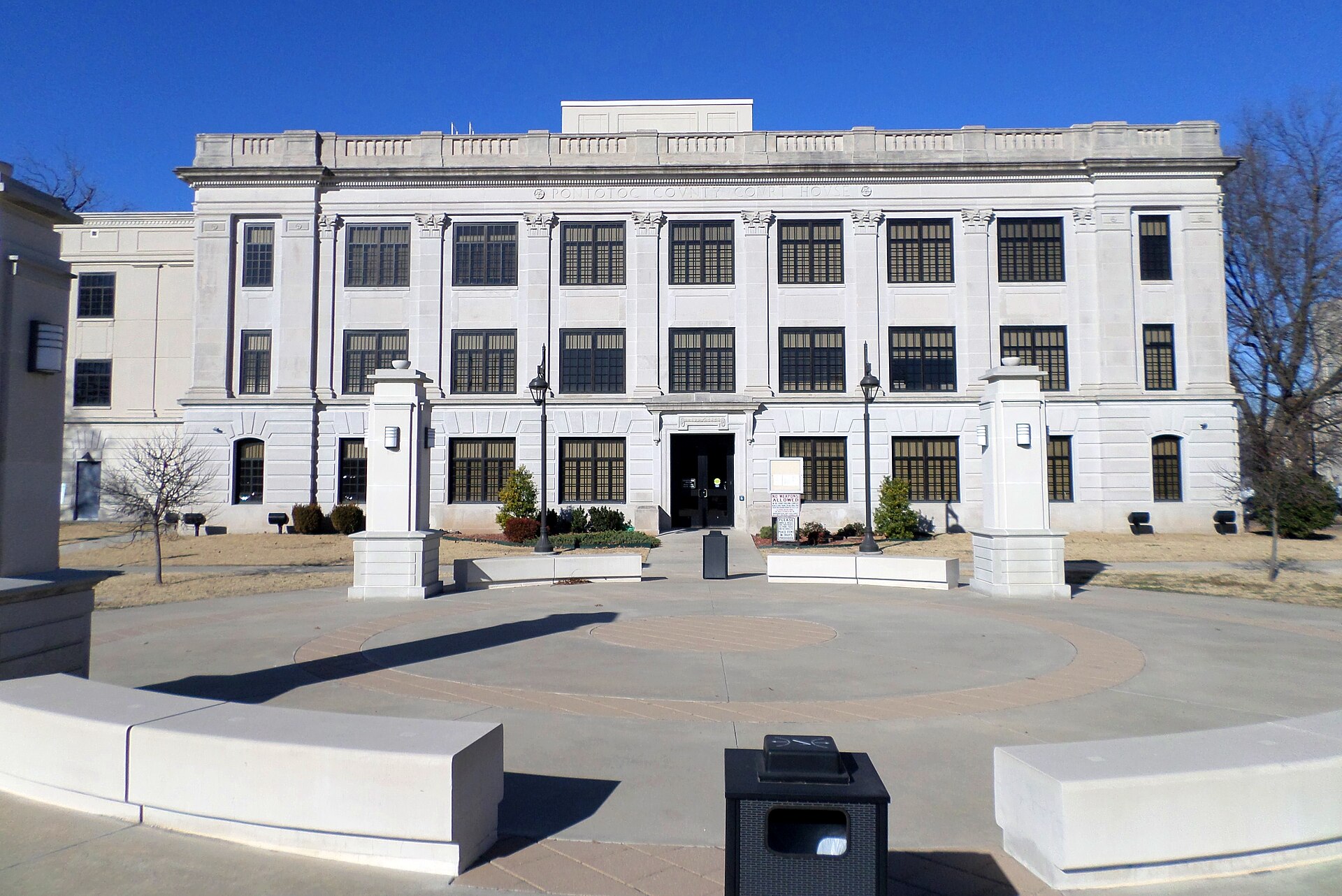
District 5 District Judge Carson Brooks, who is presiding over the case, set a trial date for Feb. 16, 2027, at the Pontotoc County Courthouse.
In his denial of the “motion to suppress the confession as involuntary” (a pretrial request to a judge to exclude a statement from evidence because it was not given voluntarily), Brooks wrote: “The court concludes that the defendant was fully and adequately advised of defendant’s rights under Miranda, the defendant knowingly, intelligently, and voluntarily waived those rights, and that the defendant’s statement was the product of an essentially free and unconstrained choice, and was not the product of any threat, coercion, physical, abuse, deprivation, or promise. The defendant’s will was not overborne. The state has established the voluntariness of the defendant’s statement by a preponderance of the evidence.”
Originally published by The Ada News on 11 November 2026