Former police officers on trial for wrongful conviction of Alan Hall
Mike White · 29 June 2026
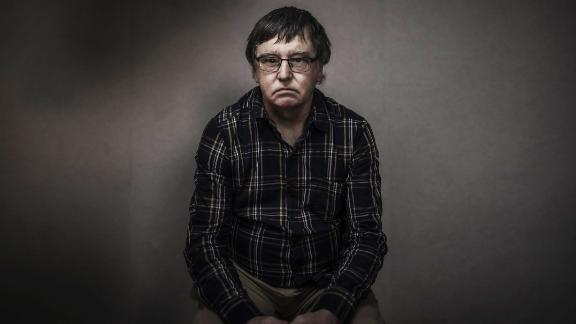
Two people on trial for perverting the course of justice in one of New Zealand’s most high profile wrongful conviction cases are former police officers, it can now be revealed.
The men have interim name suppression, but are accused of altering a crucial witness statement in the case of Alan Hall, who was convicted of murdering Arthur Easton - stabbed to death with a bayonet by an intruder in his Auckland home in 1985.
Despite numerous appeals and concerns with his conviction, Hall spent 19 years in prison for a crime he didn’t commit.
In 2022, the Supreme Court quashed Hall’s convictions, saying justice had clearly miscarried.
“As to why that is so, the Crown accepts that such departures from accepted standards must either be the result of extreme incompetence, or of a deliberate and wrongful strategy to secure conviction,” Chief Justice Helen Winkelmann said.
Hall was later awarded nearly $5 million - the largest wrongful conviction compensation in New Zealand’s history.
As part of a subsequent police investigation, three men were charged with perverting the course of justice. One has since died.
On Monday in Auckland’s High Court, Justice Ian Gault allowed it to be reported for the first time that the two men remaining on trial were officers involved with the original investigation.
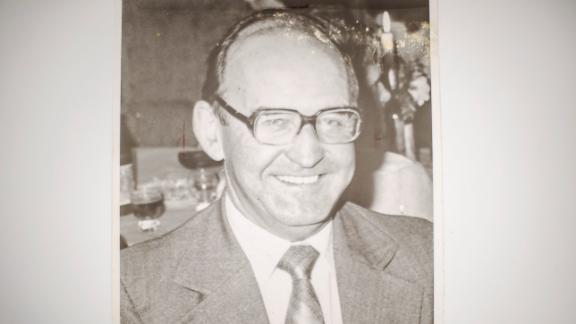
Arthur Easton, was murdered in his home in Papakura in October 1985. Photo: Supplied
The Crown alleges the officers were involved in removing a vital description from the evidence of a key witness who saw someone running from the direction of the crime scene.
Ronald Turner told police three times that the man he saw was a male Māori, and up to six-feet tall. Hall is Pakeha and five feet, seven inches.
However, the evidence presented by the Crown at Hall’s trial omitted the fact the person Turner saw was Māori.
Other people, including one of Easton’s sons, initially described the attacker as Māori, leading police to focus their early investigations on this description.
The trial of the two former officers was due to begin in February, but was delayed due to the ill-health of one of the defendants.
On Monday, both former officers pleaded not guilty to “wilfully attempting to obstruct, prevent, pervert or defeat the course of justice”.
In his opening address, Crown prosecutor John Billington KC said altering Turner’s statements to remove reference to the person being Māori was a “deliberate omission”.
If this had been included, there was insufficient evidence to charge Hall or convict him.
“That, your Honour, is how simple this case is,” Billington said.
“The failure to disclose Mr Turner’s prior statements to the defence, and therefore ultimately deprive the defence, the trial judge, the jury and the Court of Appeal of that evidence, led to this unforgiveable miscarriage of justice, which actually poisons the wells of the system of justice within which we are operating today.”
Billington said because of Turner’s identification, the prosecution at Hall’s trial knew there was a reasonable possibility Hall wasn’t the offender.
“And they knew that from as early as the date of the homicide.”
He added it wasn’t possible for police or the Crown at Hall’s trial to tell a jury they had excluded all other possible culprits, “because sitting somewhere in a police file were statements that did exactly that”.
And Billington said it was clear what Hall’s counsel at his trial, celebrated defence lawyer Peter Williams, would have done if he’d known of Turner’s true statement.
However, one of the defendants’ lawyers, David Jones KC, questioned how important Turner’s evidence really was in Hall’s conviction, saying it was “bigger than Texas, now”, but had been the subject of hyperbole.
“The trial didn’t turn on what Mr Turner did or did not say,” adding the approach now being taken to the evidence was “very emotive, non-contextual, and lopsided”.
“It’s as if the sky would have fallen in for the Crown case if Mr Turner’s statement had been disclosed.”
Jones pointed to the fact there was other evidence linking Hall to Easton’s murder, including a bayonet and balaclava left at the scene, which Hall admitted owning.
He also questioned whether the person Turner saw was involved in the crime at all, given his distance from the scene.
And Jones stressed there was no attempt by his client, a highly respected officer, to pervert the course of justice, and the evidence at the trial wouldn’t get close to showing any wrongdoing by the officers.
Hall and one of his brothers were at court for the trial’s first day, alongside members of Easton’s family.
The trial is being held before a judge alone and is set down for four weeks.
Originally published by The Post on 29 June 2026