The closing arguments in the Steven Galloway defamation trial
False Allegations Hub · 25 November 2026
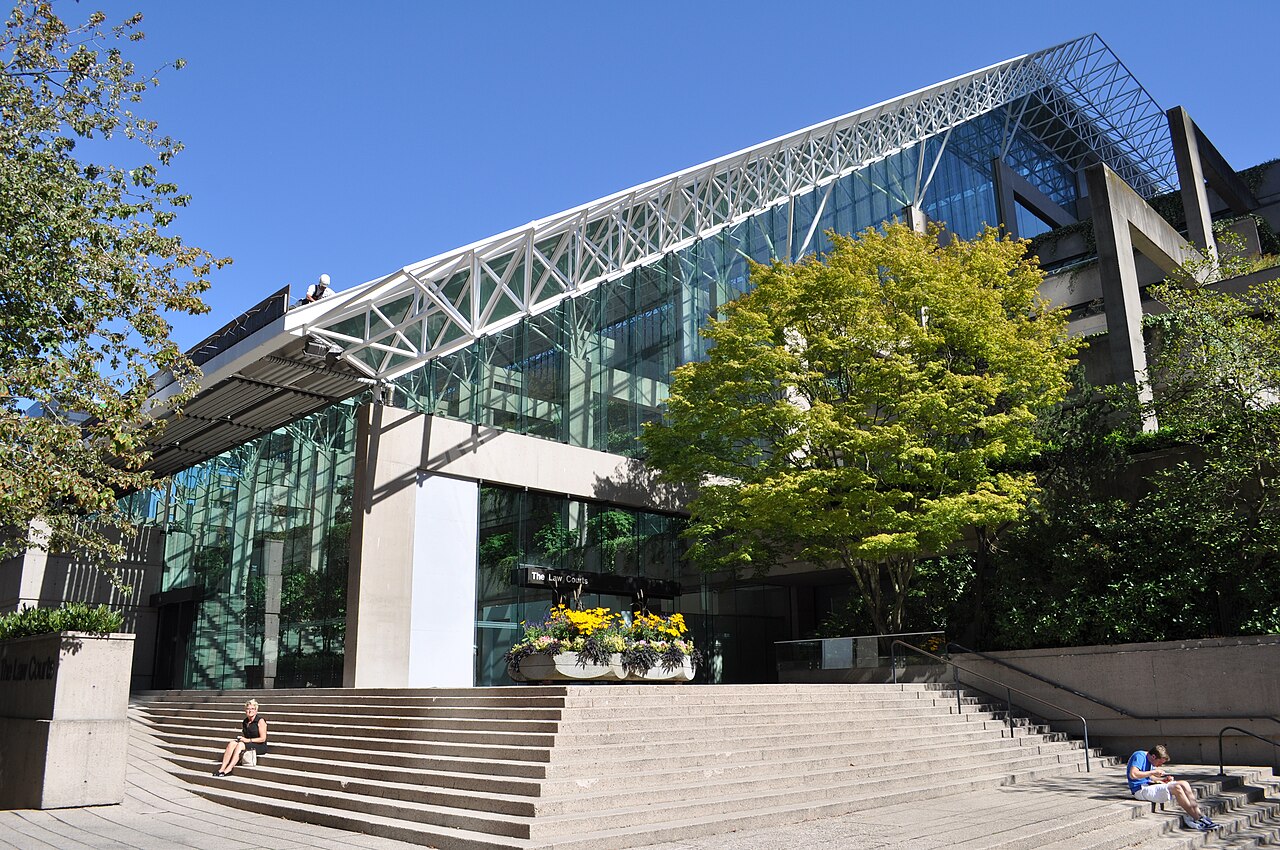
Galloway’s case: “a horrific stain on his name”
An extract from Karin Larsen’s report for CBC, 23 November 2026.
Former University of British Columbia professor Steven Galloway is asking the presiding justice in his defamation trial to vindicate his reputation by making an explicit finding of “falsehood.”
“There’s been a horrific stain on his name for over a decade,” said Galloway’s lead counsel Daniel Burnett during closing submissions on Monday. “It’s in the public interest to have a final resolution of these allegations that have floated around for so long.”
Galloway alleges defamation against a former student with whom he had an extramarital affair, and three other defendants who repeated rape allegations online and elsewhere.
Burnett said general, aggravated and punitive damages should be awarded to Galloway in the range of $3 million to $4 million, minus 25 per cent to account for several other defendants who already settled with Galloway.
Galloway’s main accuser, identified only as A.B. because of a publication ban, earlier withdrew her defence of justification, choosing not to argue that claims Galloway raped or sexually assaulted her on three occasions in 2011 were true. Justice Neena Sharma had said the woman had not admitted that her accusations are false and the court couldn’t make assumptions until it hears all evidence.
A.B. is a former UBC graduate student who is five years older than Galloway. She did not appear or testify at trial because of mental health concerns. Three other defendants — Mandi Gray, Glynnis Kirchmeier and Dana Kagis — are alleged to have repeated A.B.’s claims on social media and elsewhere.
“It’s an unfortunate reality in this day and age that truth can often end up being in the hands of those who shout the loudest, those who tweet the most and those who recruit the most allies. And the court trial process is the last stop,” Burnett told Sharma.
A.B. brought her allegations to UBC in November 2015. Soon after, Galloway was suspended, a move the university announced publicly by citing “serious allegations” against him.
A retired judge hired by UBC to conduct an investigation found that the accusations against Galloway were unsubstantiated.
Galloway was fired for misconduct. He was never criminally investigated.
The defence: “a process and not publicity”
An abridged extract from The Canadian Press’s report at CTV News, 24 November 2026.
A lawyer for the woman who accused author Steven Galloway of rape says she shared her allegations with a small circle of people and can’t be held legally responsible for all the harms done to his reputation.
Arden Beddoes, a lawyer for the woman known as A.B, who can’t be named under a publication ban, said there were “intervening” causes that harmed the former creative writing professor’s career.
Beddoes began his final submissions in B.C. Supreme Court on Tuesday after Galloway’s lawyers concluded their closing arguments, asking the court to award several million dollars in damages for defamation.
Beddoes said Galloway is seeking one of the largest defamation awards in Canadian history, but his client can’t be liable for the actions of others, including the University of British Columbia’s statements about Galloway’s suspension and firing.
He said the university’s public statements about Galloway being suspended due to “serious allegations” and terminated for a “record of misconduct, resulting in an irreparable breach of trust” were key factors driving the controversy that ensued.
Beddoes told the court that other defamation cases have involved sustained public campaigns where allegations are spread widely, which his client did not do.
She had refused to participate in a CBC documentary about sexual assault, Beddoes said, and had only confided in people over emails and in conversations, sharing details only when asked to do so by others.
“That pales in comparison to other cases where there have been malicious campaigns involving hundreds of posts and extensive public efforts,” to spread defamatory allegations, he said.
Later Tuesday, the judge asked about the testimony of A.B.’s husband, who told the court that she had expressed a desire to “destroy” Galloway.
“Is that not evidence of malice?,” Justice Neena Sharma asked Beddoes.
“It is evidence of animus at that point in time,” Beddoes said.
Final submissions in the defamation trial began this week, and the court heard that Galloway is seeking nearly $5 million in rarely-awarded special damages in his defamation lawsuit against the woman who accused him of rape.
Galloway’s lawyer Dan Coles told the judge that special damages would include financial losses — both past and future — stemming from the loss of Galloway’s writing career.
Galloway’s lawyer, Daniel Burnett, said his client’s accuser started rape allegations then poured “gasoline” on them by encouraging others to spread the claims on social media and elsewhere.
Beddoes said on Tuesday that the fire analogy “falls apart,” because Galloway is asking the court for the woman to be “answerable for far more than the words she uttered.”
“In November 2015, she reported her allegations in confidence to fewer than 10 people, professors to whom she reported, a friend and a small circle of support persons,” Beddoes said. “Her alleged defamatory words were spoken within a university reporting context.”
“We say she sought a process and not publicity,” Beddoes said. “She did not use social media to accuse the plaintiff by name. She did not go to the media.”
A.B. did not testify in the trial, and she did not attend a court-ordered discovery for the case.
The court heard that the woman is not defending her allegations as true, but has not conceded them to be false.
“A.B. accepts that she is answerable for what she herself said and wrote to her own audience,” Beddoes said.
But he said the court should “confine her liability,” and not “attribute the consequences of UBC’s conduct and the independent acts of third parties, and of the plaintiff’s own decisions, to those responsible for them.”
The trial continues on Wednesday, and the court will still have to deal with issues of costs and an application to hold A.B. in contempt for failing to attend a court-ordered discovery.
Originally published by CBC on 23 November 2026