High Court finds that Metropolitan Police unlawfully arrested headteacher, and unlawfully passed private information to the media
Jaffa Law · 17 November 2026
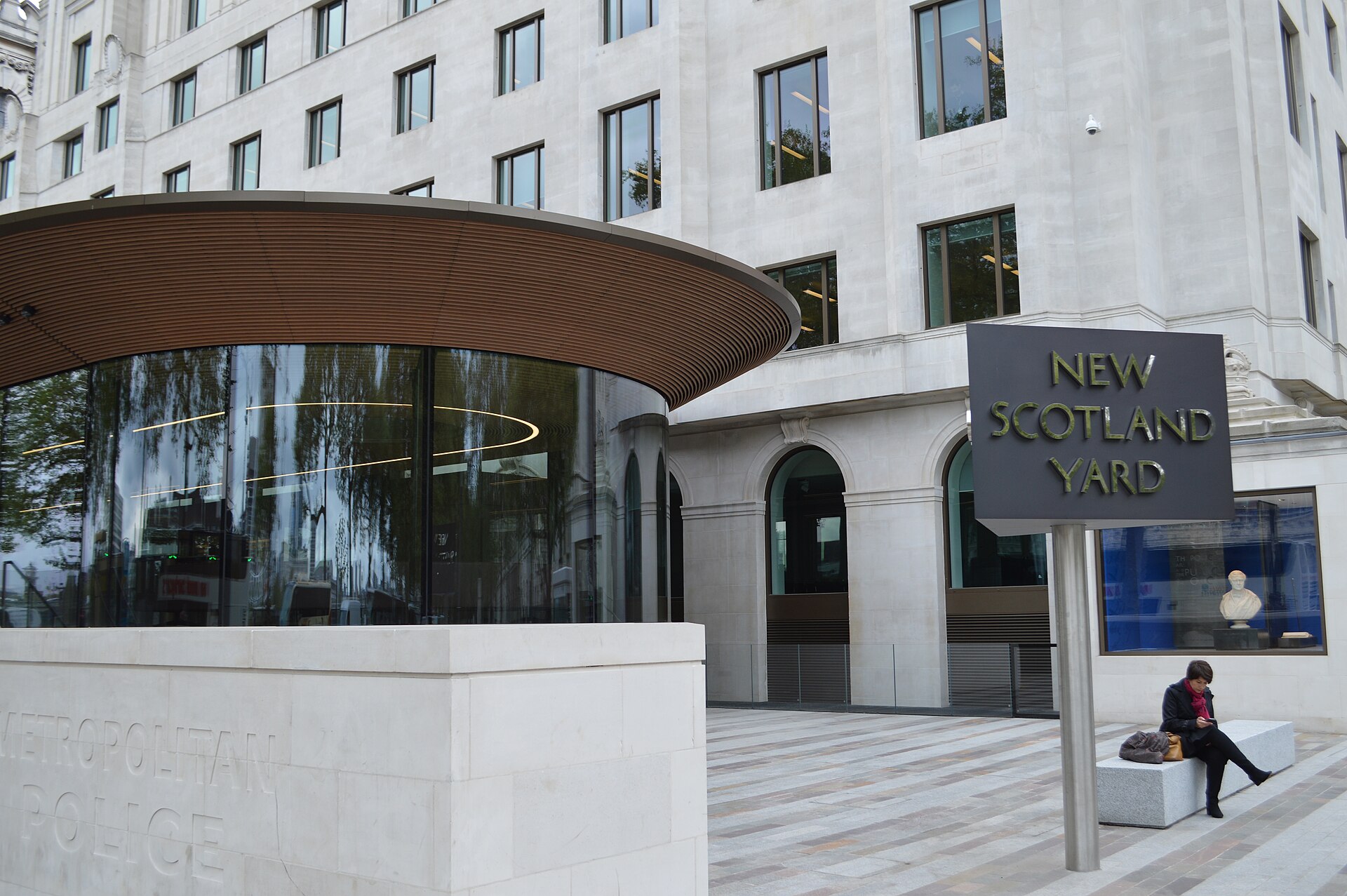
Jaffa Law’s client, known as GDB, wins record damages for misuse of his private information by the police
On Friday 13th November 2026, the High Court handed down judgment for the claimant in GDB v The Commissioner of Police of the Metropolis [2026] EWHC 2942 (KB) - GDB v The Commissioner of Police of the Metropolis - Find Case Law - The National Archives
The Claimant, known as GDB to preserve his anonymity, was the founder and headteacher of a private school. As Mr. Justice Jay, the trial judge, observed (para 3), GDB had dedicated his life to the school since its foundation decades ago. He had built it from nothing. Due to his charisma, work ethic and determination, and the qualities of others, the school became a great success with its particular emphasis on inclusivity, diversity, creativity, moral and physical education, and seeking to bring out the very best in its pupils.
The local authority received three anonymous communications, possibly from the same individual, which hinted at improper activities by GDB at the school. The allegations were entirely false. The communications were passed to the police. The Metropolitan Police Service (“MPS”) sought and obtained a search warrant for the school and GDB’s home. It did so, as the judge found, notwithstanding that it was based on the “most tenuous of information” and the anonymous communications “provided no proper basis” for applying for a warrant (para 48). A suggestion that GDB had been normalising photography to take indecent photographs was “bordering on the ludicrous” (para 59). There was, the judge said, “simply not enough to go on” and the officer had “rushed to judgement” (para 67). The officer making the application failed in his duty of disclosure and misled the District Judge (para 64). GDB was subsequently arrested on suspicion of offences of voyeurism and possessing indecent photographs. The arrest was unnecessary and unlawful (para 113).
The MPS then confirmed to a journalist that it was investigating the school, and that a man had been arrested of those offences. That resulted in a newspaper report with a headline referring to an arrest in a voyeurism inquiry, and identifying the school. A likely consequence of the newspaper report was that an historic allegation of sexual assault was made which was, the judge said, “far from convincing”. GDB was interviewed about it voluntarily, but the MPS passed incorrect information to the same journalist which stated, wrongly, that the same individual had been further arrested for sexual assault. That was then also reported in the press. The judge held that the passing of information to the journalist was a misuse of private information. GDB had a reasonable expectation of privacy, and the information provided, though it did not name GDB, had the effect of identifying GDB to the journalist (paras 213 to 219).
The consequences for GDB and the school of the newspaper reporting, based on information provided by the MPS, were profound. GDB was never to teach again. A significant number of parents withdrew their children from the school. The loss in pupil numbers meant that by the summer of 2017, the school could no longer operate profitably. GDB was forced to sell the school in September 2018, at a significant undervalue. The police investigation ended in late 2018 with the MPS confirming that it would take no further action against GDB in relation to any of the allegations. By this point, however, GDB’s time at the school, and career, were over.
The judge awarded £87,500 to GDB in general damages, of which £80,000 was for the misuse of his private information, including in respect of damage to GDB’s reputation (paras 257-258, 262). The value of a significant claim in special damages relating to the loss of profit suffered by the school, and loss of capital value upon GDB’s forced sale of the school, is to be determined at a later date.
The MPS was also ordered to pay GDB’s legal costs in full.
GDB was represented by Sam Jacobs and Percy Preston of Doughty Street Chambers, instructed by Tony Jaffa and his colleagues Eloise Spensley and Samantha Brookman, of Jaffa Law.
An Order is in place prohibiting the publication of the identity of GDB, or any identifying details.
Tony Jaffa, Partner at Jaffa Law said:
“The High Court’s judgment represents comprehensive vindication for GDB. It exposes the many and serious flaws with the police’s investigation into him, and their careless approach to releasing information about that investigation to the press, despite GDB’s warning that doing so would destroy the school. The judgment speaks powerfully to both the importance of pre-charge anonymity in criminal investigations, and of the need to ensure that a person’s privacy rights are respected throughout an investigation. That is none more so than for teachers. Without care and sensitivity, wholly unfounded concerns can be career ending, as here, for an individual who dedicated his life to this important profession.
The award of damages of £80,000 in respect of the misuse of GDB’s private information is the largest award in a non-phone hacking case in the last decade, demonstrates the extent of the MPS’ breach of GDB’s privacy rights”.
GDB said:
“A school must be efficient, open and honest. It must adhere to deadlines and a timetable. We expected the same of the police. Instead, as Mr. Justice Jay has confirmed, we had policing by hearsay, hunch and wishful thinking, with any objective scrutiny, openness or diligence entirely absent. And to compound these failings, the MPS breached my privacy rights with their unlawful press briefings.
Our school was a place of originality, high ambition and integrity. It was a place of energy, safety, purpose and joy. It was also a successful business. It always accepted and welcomed the scrutiny of legitimate agencies, in the public interest. But despite all this, the school and business were destroyed, carelessly and callously. The victims were its pupils and their parents and the outstanding staff who taught at and managed the school. A beautiful school was lost to its community, without necessity or justification.
Originally published by Jaffa Law on 17 November 2026