Interview with acquitted Basildon music teacher Mark Yeldham
Charles Thomson · 12 November 2026
“It was our wedding anniversary yesterday and I had to go out and get a card,” says Mark Yeldham. “The whole time, I’m on edge. I’m scanning every person’s face, just waiting to see if anyone recognises me.”
We meet four days after a jury at Basildon Crown Court unanimously acquitted the music teacher of historic sexual abuse. He is of course relieved by the verdict, but says he’s also £100,000 in debt, utterly furious and perpetually fearful for his safety.
“I’ve had four years of being constantly on edge, jumping at every car door. I don’t know when my brain is going to decide it’s safe for me to be outside again. It’s not going to happen overnight,” he says.
Police raided Yeldham’s family home in Corringham on a snowy Sunday one December, arresting him and seizing his electronic devices. Despite facing allegations from a single accuser and her mother, whose accounts contained significant discrepancies, and despite messages recovered from his phone contradicting parts of what they later told police, he was charged.
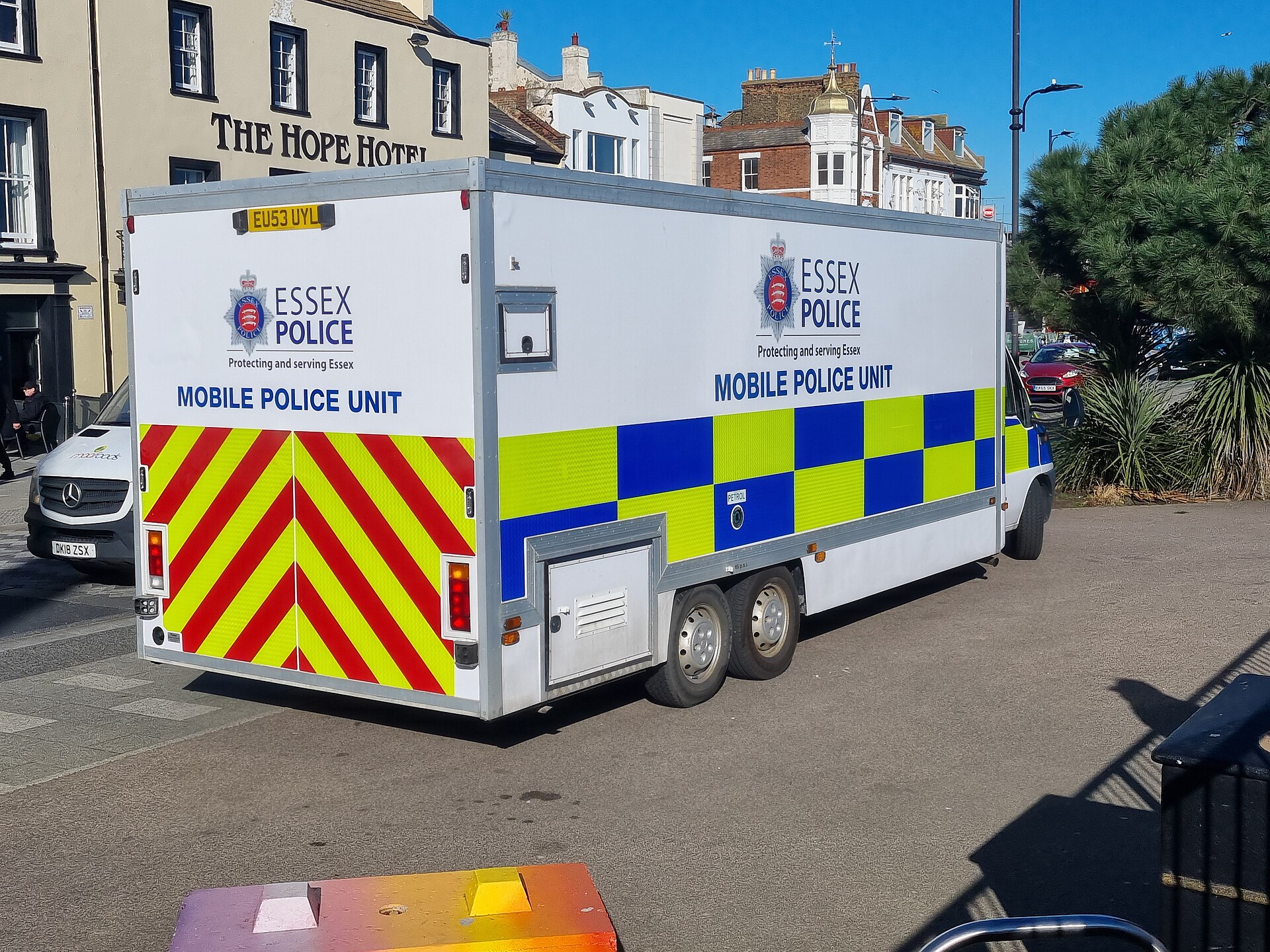
Then Essex Police posted on Facebook about his case and the allegations shot through the community.
“I’ve had people give me abuse in the street,” he says, cradling a coffee.
“You feel physically sick. You are so scared you don’t know what you’re going to do. I’m worried about bricks coming through the window, my tyres being slashed. You’re looking around all the time.
“You suddenly get this clarity when you’re out and about, where you see everything with this definition, you hear stuff so much more acutely. You’re in this hypervigilant mode 24/7. It’s exhausting.
“In the doctor’s surgery, they put my name up on the board and I’m having to sit there doing breathing techniques to calm myself because I’m so scared of repercussions. I go to the pharmacy and people are giving me looks, talking about me. I’m out walking the dog and I hear people saying, ‘That’s him’. That is really scary.”
He knows this interview will increase his visibility and says he has worried about that for days, but is speaking publicly because he feels the authorities must be held to account.
“I’ve had four years of not having a voice, where people can put anything online about me, including the police, but I’m not allowed to say anything,” he says.
“The bias all the way through the whole process was awful. They’ve just ignored or not been interested in the evidence that doesn’t support their narrative.”
No matter what way he looks at it, he cannot escape the conclusion that his treatment by police and prosecutors has been “malicious” and “vexatious”.
Allegation
A woman contacted police to report an allegation that Yeldham had behaved sexually towards her daughter years earlier. She then left, saying she couldn’t stay because she had somewhere else to be. It would later emerge that the report followed a therapy session in which a therapist said they would have to report the allegation to police if the family did not do so themselves.
In a hesitant interview weeks later, the woman’s daughter told police she thought she remembered Yeldham, in piano lessons, pulling down her tights and knickers, telling her it would improve her posture.
But, she added: “Maybe I’m overexaggerating the situation.”
Yeldham, a full-time music teacher at Lee Chapel Primary School and private tutor at Billericay Music Academy, was busy preparing for his pupils’ Christmas choir concerts when police came to arrest him.
“My initial response was that a child at school must have done it because I kept them in at break time or something,” he says.
He was put in a “freezing cold” cell, with a toilet but no sink to wash his hands after using it, and held there until the following afternoon. By the time he was interviewed, he’d not slept for about 30 hours.
“You’re just laying there processing the whole thing over and over again, driving yourself loopy,” he says. He described his time in custody to the jury as “dehumanising”.
“You’ve got everybody looking at you, judging you like you’re some piece of crap,” he says.
“When she came to interview me, the detective did this thing where she looked me up and down and pulled this face of disdain. I thought, ‘You’ve decided I’m guilty before you’ve even met me’.”
Yeldham freely surrendered his phone pin and computer password and told officers he would answer all their questions.
“It started off all polite. I figured, ‘I’m going to work with them. I’m going to be completely transparent, to show I’ve got nothing to hide’,” he recalls.
“But then it started to get slightly nastier. Murkier. It started getting horrible and aggressive. They were shouting at me, basically trying to break me down.”
Yeldham describes some of the questions as baseless and degrading, such as whether he ever made his disabled wife dress up as a schoolgirl when they had sex.
At his trial, instead of showing the interview, the prosecutor and the lead police officer acted it out from a transcript, which is standard procedure. But, says Yeldham, “I was fuming. They read it in this matter of fact, calm way with no emotion.”
The questions about his sex life were edited out, the prosecution having agreed before trial that they were irrelevant.
“If the jury had seen that video, they would have been shocked. It was abhorrent,” he says.
Bail
Yeldham says he has taught thousands of students.
In addition to his full-time role at Lee Chapel Primary School, he worked four evenings and Saturday mornings every week at the Billericay academy, teaching upwards of 40 private students at any one time.
He had to work a lot, he told the jury, as he was the sole breadwinner for his family. His wife has myotonic dystrophy, a muscle-wasting condition which was also passed on to his daughter.
Despite being their primary carer, Yeldham’s bail conditions banned him from his house, on grounds he posed a sexual risk to his own daughter. A crown court judge eventually ruled the ban was unnecessary and ended it, but by then he’d been kept from his family for over a year.
Essex Police told the Echo: “Bail conditions are put in place to manage identified risks and protect those involved while an investigation is ongoing. They are not a judgement of guilt. In this case, the conditions were reviewed as the investigation progressed and were subject to senior officer oversight.”
Yeldham’s bail did allow him to keep teaching, provided another adult was present – usually the student’s parent. He said they started telling him they’d been visited by the police and were shocked to hear he was under investigation.
A colleague spoken to by officers told Yeldham police had claimed he possessed photos of underage girls in their underwear – something he says he knew was not true.
Called in for another interview after his devices were analysed, he says police had deemed a photo on his phone, of two girls playing on a beach, a “high risk” image.
“My wife took that of my daughter and our niece in Southend. I wasn’t even there. I was at work,” he said. “She sent it to me to show what a lovely time they were having.
“This is the problem. They’re sitting, going through your whole life, making judgement calls on you with no context at all. It’s so scary, because they could do that to any one of us – just pick some random photo you’ve taken by accident and deleted, or someone else has taken and sent you, and all of a sudden, you’re being held accountable and judged on it.”
Yeldham’s phone contents dated back to 2017, containing almost 9,000 images, over 26,000 messages and his search history. No illegal sexual images of children were found on his devices, the court heard.
During his trial, the court heard that officers contacted his other underage female pupils and none reported inappropriate behaviour by him.
Nonetheless, he was charged.
At the police station, he says he told a detective he couldn’t believe the way he was being treated in a country where everyone is meant to be innocent until proven guilty.
He claims she replied: “Historically, accused men are guilty.”
The Echo put Yeldham’s account of the exchange to Essex Police. The force did not specifically address it in its response.
Contempt
In 2024, while awaiting trial, Yeldham was arrested for suspected breach of bail after somebody reported he was still teaching – even though his bail allowed that.
The allegation was abandoned – but not before Essex Police announced the arrest on its Facebook page.
The force left comments open on the post, leading to a wave of potentially defamatory and prejudicial comments.
Yeldham believes this was done purely to publicise the case and trawl for further accusers.
The Echo put that allegation to Essex Police. The force did not specifically address it in its response.
“They were awful comments. Heinous,” he says. “People were saying things like, ‘I can’t believe scum filth like this are allowed to walk the streets’.”
Essex Police told the Echo it received no complaints about the post and nobody faced any misconduct proceedings over it.
There were, however, severe repercussions for Yeldham.
“All of a sudden, you go from this guy who’s been like the centre of the community, where you can’t go anywhere without people coming up, to nobody wants to touch you,” he grimaces.
“People are crossing the road to avoid talking to you. It’s really hard. Even people you’ve known for a long time, who say to you off the record, ‘We know you would never do this’, they kind of ostracise you, maybe just be out of embarrassment because they don’t know how to deal with it.”
Originally published by Echo on 12 November 2026