Did the judge overstep in the Russell Brand trial?
False Allegations Hub · 27 October 2026
Russell Brand is standing trial at Southwark Crown Court on seven charges — three of rape, three of sexual assault and one of indecent assault — brought by six women and alleged to have occurred between 1999 and 2009. He denies all of them. The trial opened on 12 October 2026 before Mr Justice Bennathan, who had earlier refused a defence application to postpone the case over pre-trial publicity, and is expected to run at least six weeks. No verdict has been returned, and nothing in the proceedings has been decided.
The moment under discussion
During cross-examination of the first complainant, Brand’s counsel Ian Winter KC put to her that in her video-recorded police interview she had said “no” only in her head, rather than out loud. The judge interrupted, saying the question did not accurately reflect her interview, in which she had also described saying it aloud. When counsel protested that he was conducting a cross-examination, the judge replied: “Shush. I’m the judge. You have to let me speak.”
A second exchange is also discussed, in which the judge offered the complainant a pause while she was distressed under cross-examination. She declined it and continued.
Why a judge’s intervention matters
A jury takes its cue from the judge. The judge is the one figure in the room with no stake in the outcome, and jurors read any sign of where they lean. That is why an intervention during cross-examination carries weight out of proportion to its length — and why, in England and Wales, excessive judicial intervention is a recognised ground of appeal where it prevents the defence from properly putting its case.
Against that, an English judge is not a referee alone. The duty to prevent a witness being misled, or evidence mischaracterised, is part of the role, and English procedure expects more intervention than the American adversarial model. Whether this particular interruption fell on the wrong side of that line is exactly what is in dispute — and it is worth saying that “overstepped” is the panel’s characterisation. No mainstream report of the trial has used that framing.
What makes the point of contention so sharp is a change in the law that falls inside the period covered by the charges. Until 1 May 2004, when the Sexual Offences Act 2003 came into force, the rule in DPP v Morgan meant an honest belief in consent was a defence even where that belief was unreasonable. After that date, the belief must also be reasonable. The allegations here run from 1999 to 2009, straddling the change — so for the earliest counts a more defendant-favourable test applies, and whether the complainant said “no” aloud, rather than only in her own mind, goes directly to it.
The speakers
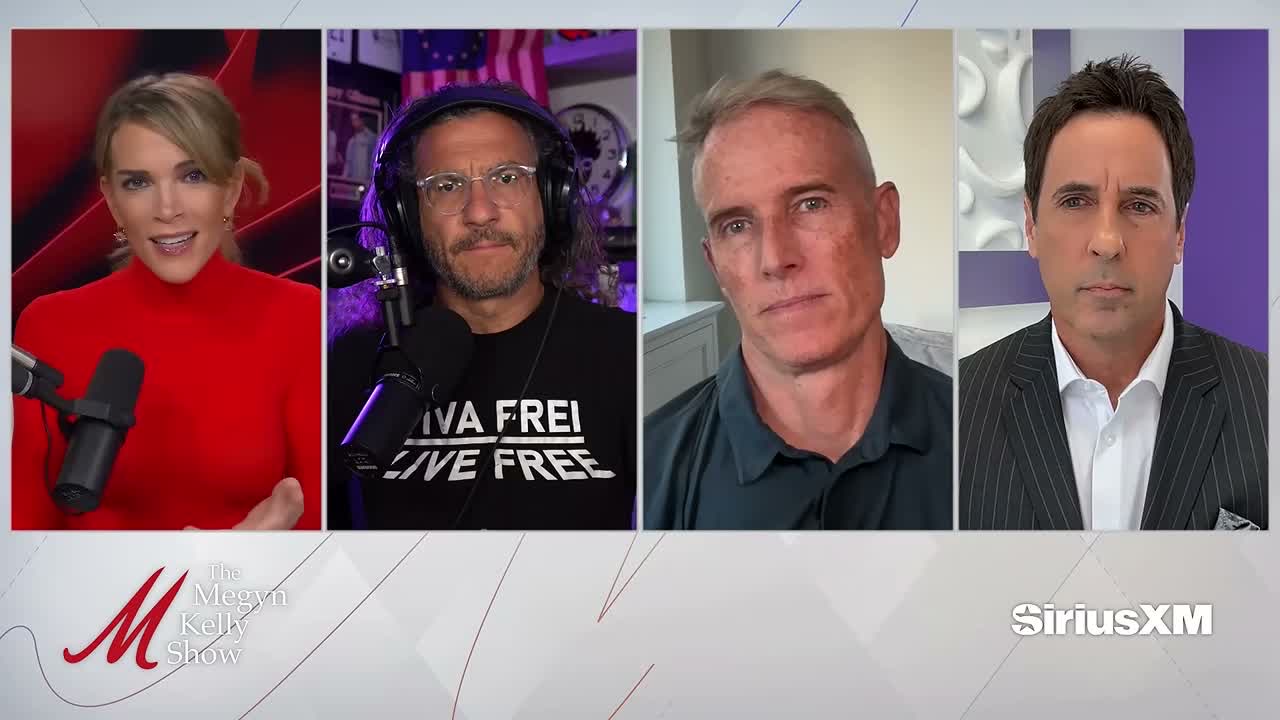
Megyn Kelly is a lawyer and former Fox News and NBC anchor who hosts The Megyn Kelly Show. Mark Eiglarsh is a Florida criminal defence attorney and former prosecutor, host of Positively Legal. Matt Murphy is a former sex-crimes prosecutor in Orange County, California, host of In The Well.
All three are American lawyers discussing an English trial, and several of their criticisms rest on American adversarial norms rather than English practice. Viva Frei is on the panel but does not speak in the portion transcribed here.
The segment is on the Megyn Kelly Show’s YouTube channel.
This is an edited transcript of the video, itself an excerpt from a longer episode. The views and characterisations are the speakers’ own, not ours. The trial is ongoing and nothing in it has been decided. The account of what was said in court comes from the speakers’ reading of BBC podcast coverage.
“Six women, seven charges”
Megyn Kelly: I’ll tell you the one that I think is the most problematic. So it’s six women, seven charges, and three of them are alleging rape. One vaginal rape — forgive me, I should have given a disclaimer that there’s going to be very graphic talk, and it’s about alleged rape and sexual assault. One alleges a vaginal rape, one alleges an oral rape, one alleges an anal rape. And then there are three other women who allege other, comparatively more minor, incidents.
The one who’s alleging a vaginal rape, to me, is the most problematic one for Russell. The other women — there are some potentially good facts to cross them on. Like the one who’s alleging the anal rape, who’s the last alleged victim to have testified, is the one who their text messages say was obsessed with him. She loved him. She willingly went backstage at one of his events. She testified she had a boyfriend, but then went back to his house on another day and knew that they’d be having sex and wanted to have sex, and then he flipped her over and came at her anally, and she says that was a rape.
But the cross-examination brought out all these facts. I don’t really want to get this graphic, but let’s just say the two of you had been dancing around it, and you’d been flirting about this possibility, and then he did it, and it happened quickly and it was kind of over, and you didn’t allege rape. So it’s a terribly graphic incident.
I’m just setting up why I think the first allegation is the most troublesome for him, because this was a woman whom he met at an event before he was really famous. They were chatting, they were hitting it off. She said she was very young and naive and wanted to continue the conversation. She didn’t want to go to a bar — I guess she wasn’t much of a drinker or something — and she invited him back to her apartment.
Which, okay, I get how you could make hay out of that if you’re Russell’s lawyer: you knew it was going to happen when you invited him back to your apartment. But that’s completely defensible. Just because I invite a man back to my apartment does not mean I have to do all the sex acts that he then wants to do with me.
The complainant’s account
Megyn Kelly: Here’s some of the BBC’s podcast giving details on complainant one, on what allegedly happened to her.
She alleges that he pushed her, she ended up on the bed with him on top of her, straddling her. And she said, what are you doing? And he responds saying, no, it’s fine, it’s normal. And she says, what are you doing? No, stop. That was her testimony to the police during that video-recorded interview — that she said no, stop, no, out loud.
She then described Russell Brand taking down her trousers and her underwear. She said her top stayed on, but he pulled down her trousers and her underwear. He didn’t take it off her body. She clarified that her feet remained inside of her trousers and that she still had her shoes on. She then says, quote, he put himself in without thinking how it would hurt me. Quote, he just wanted to ejaculate.
She believes it lasted longer than five minutes because she could feel the weight of his body on top of her, crushing her and making it difficult for her to breathe. And she also said what was going through her head was, quote, just don’t kiss me, don’t kiss me. I didn’t want his mouth anywhere near me. He was doing, quote, lizard-like things with his tongue. It was disgusting. He tried to put his fingers in my mouth. She continues, saying, I remember thinking I wish it would stop. I would have said, get off me, no, it hurts. I completely closed my eyes.
The image of the woman not even getting her trousers off is what stays with you. That to me is what a rape would look like. There would not be any ceremonial unrobing.
The intervention
Megyn Kelly: So the lawyers got up to try to cross-examine her. She didn’t come forward, she didn’t allege rape, until the Channel 4 documentary. And they tried to cross-examine her on that statement, allegedly not telling the investigators at that time that she ever said no to Russell Brand — which would be a damning fact.
Men cannot just glean what’s in our heads. We need to say no, or shove them off, in some way. You need to communicate no, in order to convince a jury that this was rape, because the man has a defence of reasonable belief of consent. Russell Brand has that defence available to him. It’s an element of the law in Great Britain. If he had a reasonable belief of consent, he can get out of this. So something needs to have been done to tell him no, in some way, shape or form.
And so the defence [Ian Winter KC] was cross-examining her on what she said in her initial statement, and the judge intervened with a save for the witness. Here it is, being described again by this podcast.
Winter said: you didn’t struggle when he was on top of you, you didn’t struggle during what you say is an alleged vaginal rape. And complainant one says, he was really heavy, I felt like I was being crushed, like I couldn’t breathe. Winter said, you didn’t say no. Complainant one said, I did say no. Winter said, in your video-recorded interview you said you said no in your head, but you didn’t say it out loud. And complainant one said, I said it, I said it. Winter then moved on and said, he asked you while this alleged vaginal rape was taking place if you were enjoying it, and you didn’t say no.
So the judge came in and said: actually, you’ve asked a question that implies that in her video-recorded interview she only makes reference to saying no in her head, but that’s not true, because she does say that she said it out loud. And Winter said, I’m conducting a cross-examination here, it’s the victim that answers. And the judge said: shush, I’m the judge, you have to let me speak, and it sounds like you’re putting a question to her that is not reflective, or accurately reflective, of what she said in the video-recorded interview.
“That judge doesn’t understand his role”
Mark Eiglarsh: First and foremost, that judge doesn’t understand his role. The only one that jurors trust — as much as Matt Murphy is always a trustworthy kind of guy, they know he represents the people, but he wants a conviction; the defence lawyers, they want to acquit their clients, doesn’t matter what the evidence is — the only one they trust and cherish, the guy who gives them the pizza during breaks, the guy who controls their life during this trial, is the elevated one wearing the black polyester. When he makes his position clear, and boy did he do so, he is in favour of the victim. He didn’t say it, but that’s exactly what’s implied.
Objectivity goes out the window. Fairness goes out the window. That judge, I think, commits error by doing what he did, and I would be absolutely outraged. I would move for a mistrial and ask that he recuse himself. And I think that that’s probably the worst moment in this trial for Russell.
The second exchange
Megyn Kelly: Well, Matt, here, I’ll give you one other event involving the judge, just to keep it moving forward, and you can comment on both of them. Here is the BBC describing what happened in court.
He [Winter] said: you said he was wearing briefs — budgie smugglers, so very, very tight underwear — but in the pictures that we have that are in evidence, that you took, that you say Russell Brand asked you to take, he’s wearing white trousers. He’s not in budgie smugglers, but you said that he was when you took the pictures. And complainant one responded, saying, I don’t have an exact recollection in the order of what he was wearing at what time. I thought I took pictures of him in the budgie smugglers because I was just repeatedly clicking the camera, and it’s one of those cameras that you have to wind up, and I wasn’t winding it.
And then Winter questions: well, when you came out of the bathroom and you saw that he’d taken his top off, you could have gone back in, you could have tried to leave the hotel room, but you didn’t do either of those things. And then complainant one got very emotional. She was crying and finding it difficult to finish her answers. But she said, quote, I can categorically tell you I did not find that man attractive, I thought he was gay. And she continued crying.
The judge said, you know, we can pause, we can stop. By the way, she did not take the pause. She said it’s not going to get any better, and she kept going. But I don’t know — when somebody’s upset, sometimes they’ll say let’s take a pause. I think it’s usually the cross-examining attorney who would say let’s take a pause, not the judge, to step in and stop your flow as a man’s freedom hangs in the balance. But your thoughts.
“You are at a critical point for the fairness of a criminal defendant”
Matt Murphy: First of all, let me just preface it. Give me a minute here to address a couple of things. Number one, I prosecuted these cases — I prosecuted these in California. I’ve also represented women who’ve come forward in similar cases, pro bono. So this is the world I know.
Everything Mark just said about the judge’s comments was 100 per cent spot on, and I’ll go further than that. You are at a critical point for the fairness of a criminal defendant in cross-examination.
And so the audience understands: what this woman testified to was, she invites Russell Brand back to her hotel room, she comes out and he’s basically already in his budgie smugglers — budgie’s a bird, so basically like tighty-whities, which paints quite an image, right? She comes out of a bathroom, naive girl, and he’s there in his underwear. Those photos contradict what she said. And what she told police, according to the evidence that we have, is that in my mind I was saying no.
The law back then — they’ve changed the law in the UK regarding general versus specific intent for sex crimes. In 2004 they changed their law to make it a general intent crime. In other words, what would a reasonable person in Russell Brand’s position see as consent? Back then, during the time of this incident, it took a specific intent, or he had to know that he was proceeding without consent. So, a little bit in the weeds there, but it is hugely significant.
So his defence lawyer has this woman up against the ropes with two significant inconsistencies, and at that point the judge weighs in, clearly on the side of the victim. And that brings it full circle to the First Amendment. That is why in the US we have to have open courtrooms. The reason why we have public trials in the US is to ensure that criminal defendants are not getting railroaded, that you have fairness at every point.
The judge weighing in — just like Mark says, the jury bonds like little ducklings to every judge in every criminal trial — that is announcing a position that is completely biased. That is anathema to everything that the American criminal justice system stands for. It is an outrageous thing. I think Mark still would be objecting, knowing Mark, and I would too. But look, it goes beyond that, Megyn. Mark will be ripping that wig right off that guy’s head.
Originally published by The Megyn Kelly Show on 23 October 2026