Removing EMDR safeguards puts justice at risk
False Allegations Hub · 20 October 2026
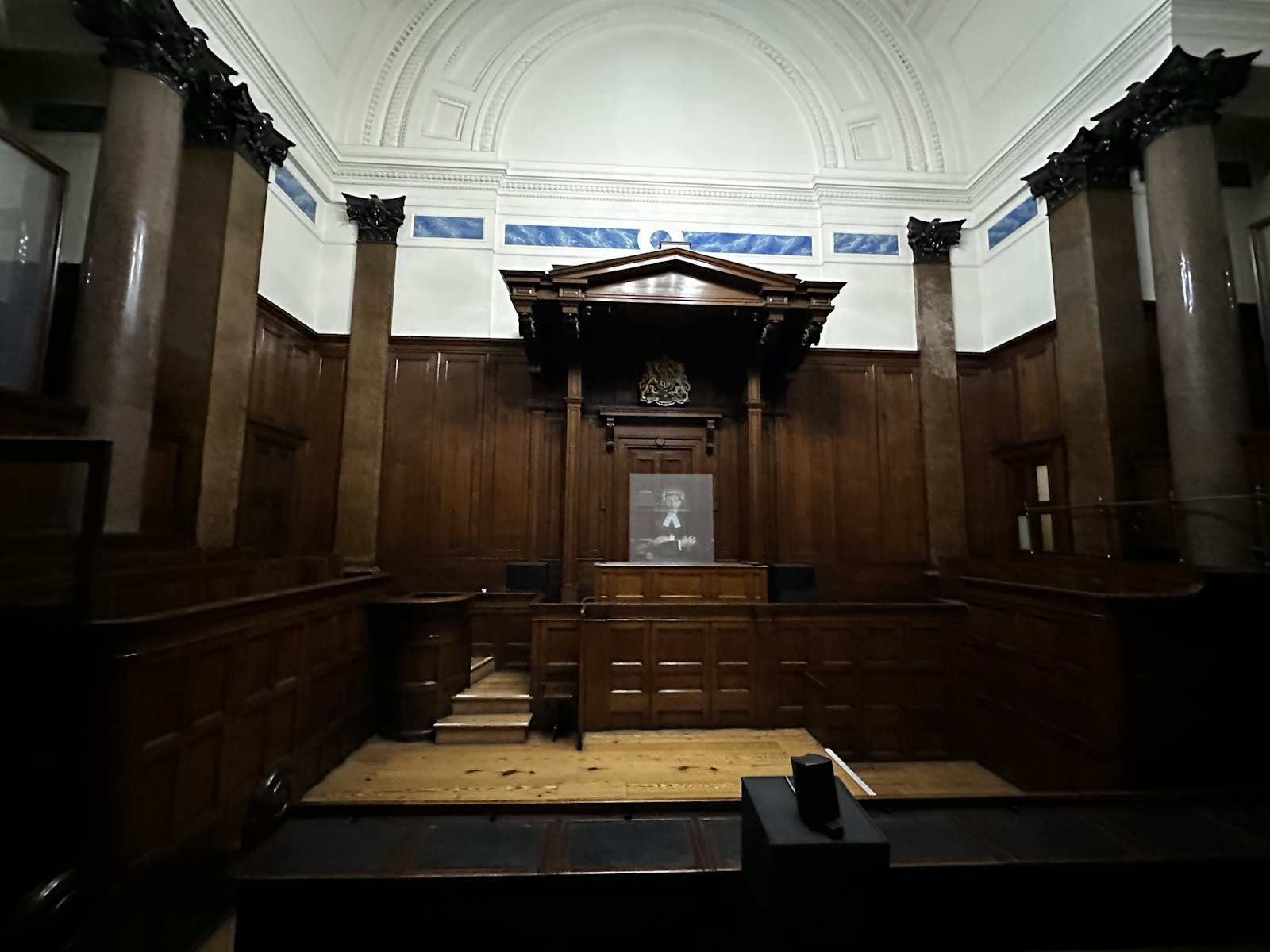
In September 2026, in a move welcomed by therapists and victim advocates, the Queensland Director of Public Prosecutions removed restrictions relating to eye movement desensitisation and reprocessing (EMDR) therapy from its prosecution guidelines. New South Wales, now the only Australian jurisdiction whose guidelines single out EMDR, says it is considering the same step.
However safeguards such as these are not invented out of prejudice; they exist because a criminal trial depends on a witness’s memory, and EMDR works directly on traumatic memories. For three decades, Australian prosecutors have required that a witness’s account be recorded before such therapy, so a court can tell what was remembered before treatment from what emerged during it.
The science on whether EMDR alters memory is unresolved. Removing the safeguards risks both unsafe convictions, and prosecutions that collapse late, after complainants have been through years of process.
What is changing
Queensland’s past guidelines likened EMDR to hypnosis and, in the ABC’s words, “effectively prohibited evidence from witnesses who had received EMDR except in specific circumstances, including having sessions recorded”. On 29 September 2026 the office released revised Director’s Guidelines and a new Sexual Violence Prosecution Handbook, which now just determines that “the fact that a person has undergone EMDR or other therapies is considered as a factor in a prosecution”. There is no guideline regarding how that factor is assessed, or what steps, if any, now protect the evidence.
In 2024, Queensland Police dropped its investigation into Sunshine Coast woman Tess Hassell’s allegations of childhood abuse because she had received EMDR. Ms Hassell has asked DPP Todd Fuller to review how many people were affected by the old guidelines, and says a detective in her case encountered around 30 women involving EMDR over a 15-year career. The ABC has reported other investigations across Australia that stalled or stopped for the same reason.
The EMDR Association of Australia also lobbied the Queensland office directly to remove the EMDR reference, and has made the same request in NSW. It calls the old guidelines “unsupported” and says the change brings guidance in line with “contemporary law and scientific evidence on memory”. As the evidence below shows, that science is less settled than this suggests.
NSW is now the only jurisdiction whose guidelines single out EMDR. Section 14.4 of the NSW ODPP Prosecution Guidelines (published 29 March 2021) states: “Evidence obtained by either hypnosis or EMDR cannot be used in any case unless it has been approved by the Director or a Deputy Director.” An ODPP spokesperson said the office has met the EMDR Association of Australia, received its submission, and “is currently considering its approach”.
Why the safeguards exist
Studies on hypnosis have long shown the issues in reliability of recall. In a 1983 study published in Science, Laurence and Perry suggested a false event to 27 highly hypnotisable people under hypnosis, and 13 later said it had really happened. In 1985 the American Medical Association’s Council on Scientific Affairs concluded that recollections refreshed by hypnosis “appear to be less reliable than nonhypnotic recall”.
Court cases in Australia in the 1990s formed the basis of the early rules around hypnosis and witness testimony. In the NSW case of R v Jenkyns (1993), Justice Hunt set out when evidence from a hypnotised witness can be admitted. In R v Tillott (1995), a case involving EMDR, the Court of Criminal Appeal approved that approach.
A NSW Police Commissioner’s Circular of 18 November 1996, reproduced in the Wood Royal Commission’s 1997 final report, set out the procedures put in place following these judgements. On the DPP’s advice, police were told these procedures were “essential” if the evidence of a witness who had undergone hypnosis or EMDR “for whatever purpose” was to be admitted, and told that “the onus lies on the prosecution to prove it is safe to admit evidence of this character.”
- Evidence is limited to what the witness recalled and related before the EMDR, and that original account must be preserved in writing or on audio or video.
- The practitioner must be experienced and independent of police, prosecution and the accused, and the session must be video recorded.
- The defence must be told and given the recordings well before trial, so it can call its own experts.
However, writing in the University of Melbourne’s Pursuit, Anthony Hurst, who chairs the EMDR Association of Australia, and colleagues say the judge in Tillott “correctly observed that EMDR and hypnosis were ‘probably different’”, yet the court still applied the forensic hypnosis guidelines to EMDR. They see that as the original mistake.
But if one reads it the other way, the concern was never that EMDR is hypnosis. It was that any process working on a memory before trial must leave a record of what that memory was beforehand.
What the science says
The evidence on EMDR and memory is mixed.
EMDR has been found to be an effective treatment for PTSD. It is recommended by the World Health Organization and by Australian (NHMRC) and UK (NICE) treatment guidelines.
On memory, the picture is less clear, with issues including:
- Misinformation. A 2018 study by Houben and colleagues found that people who made eye movements while recalling a video were more likely to absorb false details fed to them afterwards, though other labs have not replicated this.
- Delayed false memories. Two later studies found that eye movements increased spontaneous false memories, not immediately but after a delay of one to two days (Houben et al., 2020; Leer and Engelhard, 2020). In a court case, witnesses are usually interviewed well after the event and may have therapy in between.
- Therapist beliefs. In a 2021 review in Memory, Otgaar, Houben, Rassin and Merckelbach report that 93% of 457 surveyed EMDR practitioners agreed traumatic memories can be “blocked”, higher than about 70% of clinical psychologists generally. In a small survey, three in four EMDR practitioners rated a memory recovered for the first time during EMDR as likely to be genuine.
- Recovered memories. Population surveys in the US and France found EMDR among the therapies most often associated with memories “recovered” in therapy (Patihis and Pendergrast, 2019; Dodier et al., 2019).
- The other side. Callus and colleagues (2024) argue EMDR does not create false memories. The Pursuit authors say EMDR “changes how memories are experienced, not what memories contain”. A 2026 review by Otgaar and Houben concludes that EMDR may affect memory quality but does not systematically increase suggestibility.
Richard Bryant (UNSW), writing in The Conversation, argues there is “no direct evidence that EMDR leads to false memories”. But he also concedes that “you can’t readily study this in clinical settings” and that the laboratory studies “are not actually testing EMDR”. That cuts both ways. The lab work cannot prove EMDR is risky for witnesses, and for the same reason it cannot prove it is safe.
The wider false-memory research explains why the therapist’s beliefs matter. Loftus and Davis’s 2006 review of recovered memories found that suggestive procedures could plant entirely false childhood memories in about 30% of people on average, and that over 90% of people who later retracted abuse claims had “recovered” them in therapy. That review concerns techniques such as hypnosis and guided imagery, not EMDR. Its lesson carries over all the same, as Otgaar and colleagues sum it up: “the therapeutic role is patient-centred, whereas the forensic role is truth-centred.”
One finding goes against the prosecution as well; because eye movements make memories less vivid and emotional, Otgaar and colleagues warn that a genuine victim’s testimony may be judged less credible after EMDR. So a record of the account taken before therapy would then protect complainants too.
Lessons from overseas
Examples from other countries show both what can go wrong and what a workable alternative looks like.
England. In June 2020, barrister Ian Harris of Exchange Chambers described a prosecution of an elderly man of good character for historical rapes of his daughter. She had received more than 14 years of treatment for abuse by a former partner. Only under EMDR did she “recover” memories of abuse by her father. The EMDR was given by a GP who lacked the qualifications to provide it. The prosecution’s own expert found that its prerequisites had not been followed over 53 sessions, most of which were not recorded in the notes, but those reports were not served “by an oversight”. Disclosure took more than eight months, two trials were vacated, and the prosecution offered no evidence on the second day of the third trial. The accused spent over two years on bail, barred from seeing his grandchildren.
England appears to be itself rethinking the question. The Crown Prosecution Service has withdrawn its pre-trial therapy guidance “to allow for a comprehensive review in light of the new Home Office Code of Practice”, according to the CPS website, as accessed in October 2026.
Italy. A 2026 study of five Italian Supreme Court decisions found the court rejected blanket claims that EMDR makes testimony unreliable, and instead examined each case on its own facts (Pacchioni et al., Frontiers in Psychology). In one, it said “the issue is not whether, in the abstract, EMDR may alter a victim’s memories, but whether, in concrete terms, it actually did so”. Where the court did doubt testimony, it pointed to “inadequate documentation, and insufficient separation between therapeutic and investigative roles”. In a 2020 case it quashed a conviction where the treating therapist had been the first to hear the disclosure and then gave evidence. The authors caution that five decisions are a small sample.
The Netherlands. Since 1999, a multidisciplinary expert committee has advised on sexual abuse allegations at high risk of false memories, the same study notes.
Answering the case for change
The arguments for removing the rules deserve a direct answer.
“EMDR is an effective, evidence-based therapy.” That may be the case, but the guidelines used by prosecutors are not a judgement on whether EMDR helps people. They concern what happens to evidence. A treatment can be good medicine and still affect what a witness later says in court.
“There is no evidence EMDR creates false memories.” There is no strong evidence either way, because, as Bryant concedes, the question cannot readily be studied in clinical settings. What evidence exists is mixed, and some of it points to delayed false memories and to therapists primed to find hidden abuse. In a criminal trial, uncertainty about the reliability of evidence is not resolved in favour of admitting it. Bryant also writes that there is no evidence other exposure therapies cause false memories either. That is an argument for applying the same safeguard to all of them, not for removing it from EMDR.
“The ordinary safeguards of a trial are enough.” The Pursuit authors note that courts in Western Australia (R v Tanner) and Tasmania (Sparkes v The Queen) treated the Tillott guidelines as not mandatory, or merely aspirational, relying on cross-examination, expert evidence and judicial directions instead. But those tools need something to work with. Without a record of what the witness remembered before therapy, cross-examination has nothing to test the account against. The English case shows what relying on ordinary process can look like in practice: years of delay, two vacated trials and a collapse on the third.
“Victim-survivors are being denied justice.” The answer for this kind of complaint is a better safeguard, not none. A complainant whose evidence is admitted without safeguards, and whose conviction is later overturned on appeal, has not been served either.
What could be done instead?
Queensland should fill the gap in its guidelines, and NSW should reform its rule rather than simply delete it. Both need a safeguard tied to the evidence rather than the therapy:
- Record the account first. Where a complainant has reported or may report an offence, take a full recorded statement before any memory-focused therapy begins.
- Apply it to every memory-focused therapy, not EMDR alone. That removes the stigma on one treatment without removing the protection.
- Keep therapy and investigation apart. Therapists should keep proper clinical notes, use qualified practitioners, and not act as investigators. Those were the failings the Italian court and the English case both exposed.
- Disclose early. Tell the defence about the therapy and provide records well before trial, so evidence is tested beforehand rather than collapsing during the trial.
- Assess case by case, as the Italian courts do, with the prosecution bearing the onus of showing the evidence is safe.
- Commission the missing research on memory in real complainants who receive trauma therapy before trial.
Victim-survivors should not have to choose between getting well and getting justice. But the legal system needs procedures grounded in the evidence, rather than dropping safeguards in response to advocacy, however sympathetic.
Sources
Australia
- Emily Baker, “Victim-survivor calls for review after Queensland DPP changes EMDR policy”, ABC News, 5 October 2026 — link
- NSW ODPP Prosecution Guidelines, ch. 14, s 14.4, published 29 March 2021 — link
- Royal Commission into the NSW Police Service, Final Report Vol. VI (1997), Appendix P9: NSW Police Commissioner’s Circular, 18 November 1996
- R v Jenkyns (1993) 32 NSWLR 712; R v Tillott (1995) 38 NSWLR 1
- Anthony Hurst, Sarah Dominguez and Logan Harvey, “Why do Australian courts still distrust a proven trauma therapy?”, Pursuit, University of Melbourne, 9 April 2026 — link
- EMDR Association of Australia, “Queensland ODPP removes EMDR guideline from prosecution rules”, Facebook post, 29 September 2026 — link
Overseas
- Ian Harris, “False memory syndrome; disclosure and admissibility”, Exchange Chambers, 25 June 2020 — link
- Crown Prosecution Service, pre-trial therapy guidance: withdrawn pending review (CPS website notice, October 2026) — link
- Pacchioni et al. (2026), “Judicial assessment of testimonial reliability after EMDR therapy: a case-series analysis”, Frontiers in Psychology 17:1809865 — link
Memory research
- Laurence and Perry (1983), “Hypnotically created memory among highly hypnotizable subjects”, Science 222:523–524
- AMA Council on Scientific Affairs (1985), “Scientific status of refreshing recollection by the use of hypnosis”, JAMA 253:1918–1923 — link
- Loftus and Davis (2006), “Recovered memories”, Annual Review of Clinical Psychology 2:469–498
- Otgaar, Houben, Rassin and Merckelbach (2021), “Memory and eye movement desensitization and reprocessing therapy: a potentially risky combination in the courtroom”, Memory 29:1254–1262 — link
- Houben et al. (2018), “Lateral eye movements increase false memory rates” — link
- Callus et al. (2024), “EMDR: dispelling the false memory creation myth” — link
- Richard Bryant, “Do therapies like EMDR affect memories of traumatic events?”, The Conversation, 13 March 2026 — link
- Houben et al. (2020), Leer and Engelhard (2020), Wessel (2018), Patihis and Pendergrast (2019), Dodier et al. (2019) and Otgaar and Houben (2026): cited as reported in Otgaar et al. (2021) and Pacchioni et al. (2026)