RUSSELL BRAND FOUND GUILTY: Here’s a balanced breakdown of the verdict and what happens next
Jay Beecher · 5 November 2026
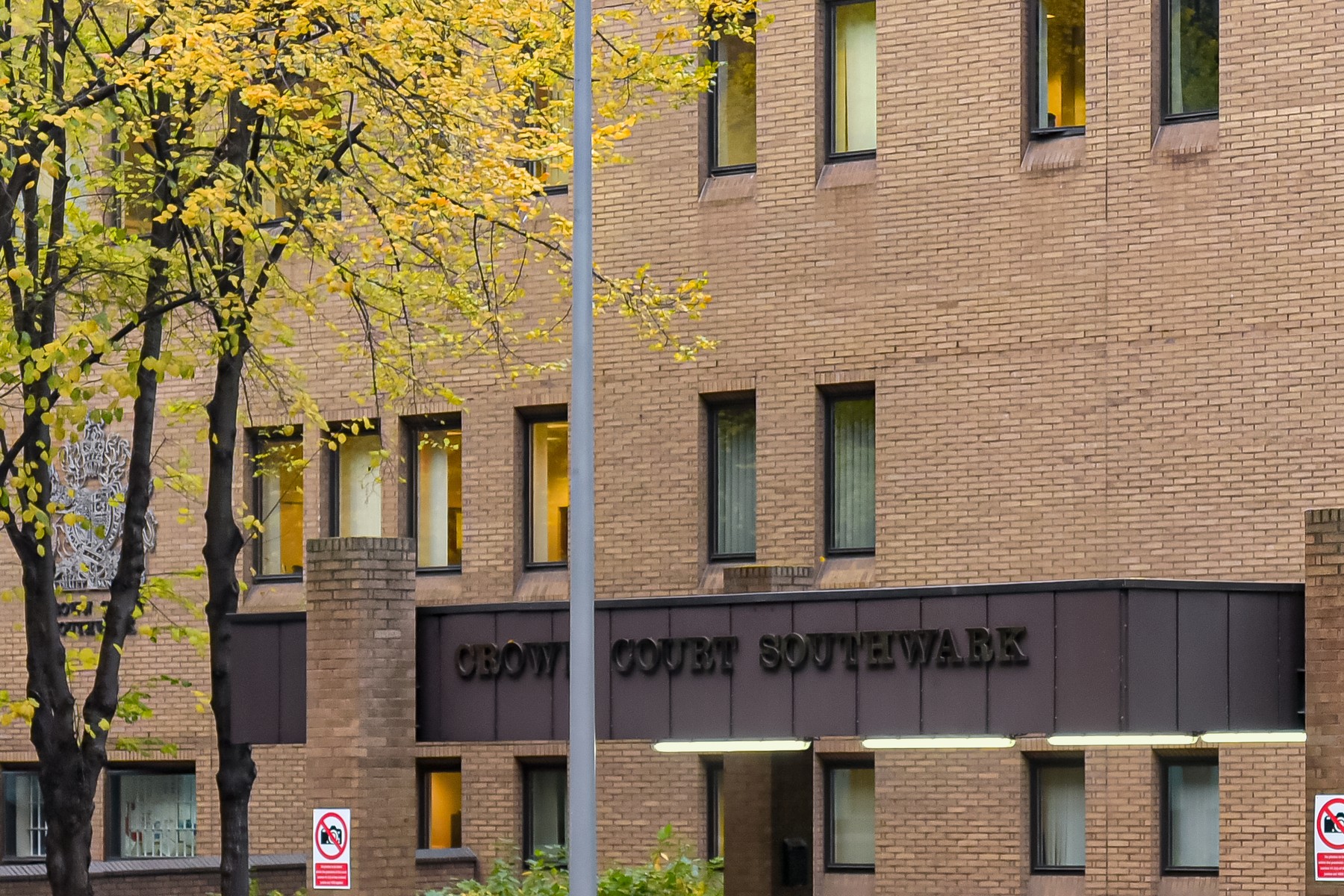
On Thursday afternoon at Southwark Crown Court, the jury returned and, count by count, took Russell Brand apart. When the word “guilty” came for the first time, on the charge of raping a young fan at his home in Hampstead, Brand closed his eyes. That was all. No speech, no sermon, no appeal to the Almighty. For a man who has spent thirty years unable to stop talking, it was the most eloquent silence of his life.
Mr Justice Bennathan did not keep him waiting. “You’ve been convicted of a number of offences including rape,” he said. “My current view is that I therefore have to remand you into custody.” A “significant custodial term”, he said, was inevitable. He refused bail, reportedly over fears that Brand, who has been living in the United States, might not come back for sentence. “Yes, my Lord,” said Brand. He turned to his wife, Laura, who had held his hand on the way into court every morning for four weeks, and said: “I love you.” Then he went down the stairs.
Within an hour, half the internet had decided he had been convicted of everything and the other half that he had been convicted of nothing. Neither half was right. So here, precisely, is what happened.
Brand faced seven charges involving six women between 1999 and 2009. The jury of eight men and four women deliberated for about eight hours over two days. According to the Metropolitan Police, its verdicts were unanimous.
He was convicted of:
Rape, contrary to section 1 of the Sexual Offences Act 2003, of a 21-year-old fan at his home in Hampstead, north London, in 2009, about a week after he picked her out after his Scandalous show at the Hammersmith Apollo.
Sexual assault, contrary to section 3 of the same Act, of a woman at a party in a Soho bar in the summer of 2004, by grabbing her breasts within a minute of meeting her.
Sexual assault of a woman who worked at a London radio station in 2004 or 2005, by pressing her against a corridor wall, kissing her and groping her breasts and bottom while members of his entourage looked on.
Sexual assault of a young Channel 4 employee in 2009, during the recording of an advertisement, by laying his head in her lap, demanding a massage and moving his face towards her groin.
He was acquitted of:
Rape of a woman in a hotel room in Bournemouth during the Labour Party conference in 1999.
Oral rape of the Soho woman in a lavatory cubicle in 2004, the more serious of her two allegations.
Attempted indecent assault of a young MTV worker in 2001, a count the judge had already reduced from indecent assault after ruling that there was insufficient evidence for the original charge.
One rape and three sexual assaults proved, then, and two rapes and an attempted indecent assault not proved. You will notice that the second half of that sentence is missing from a great many of today’s headlines.
Now to the question that matters most, and that almost nobody in the media will ask: what was the evidence? Not the allegations, not the documentary, not the memoir, not the phone codes. The evidence that the crimes for which Russell Brand now stands convicted actually happened. Let us go through it, count by count, and be honest about what it is.
Start with the rape. Here is what the jury had.
There was the woman’s own testimony, tested over hours of cross-examination, that the encounter at his house began consensually and became anal rape; that she did not consent to it; that she had been in pain afterwards and terrified she had contracted HIV.
There was evidence that she had told friends and her parents about it at the time. That is evidence of consistency: it shows she said much the same thing then as she says now. It is not evidence of what happened in the bedroom, because her friends and parents were not in it.
There were estate agent’s photographs of Brand’s bedroom and bathroom, taken about eight months later, which she identified as the rooms. That proves she had been in the house, which nobody disputed.
There were text messages. Afterwards, Brand texted her: “Because you are dirty and I want to push you further.” She replied that he had treated her “like an animal”. He apologised. These are the closest thing to hard evidence in the case, and they are genuinely unpleasant. But they do not say what the prosecution needed them to say. Nowhere in them does she say she was raped, or he admit it. They are consistent with a man who took things too far; they are also consistent, as the defence argued, with a rough consensual encounter that a young woman bitterly regretted.
And there was Brand’s own phone, in which she was saved with a “T”, which he told the jury stood for “tart”, his code for casual hook-ups, and “AP”, for “anal play”, which, he said, she had performed “upon first meeting me”. Two asterisks, he explained, meant: “Never, ever forget this individual, this is a memorable encounter.” It is a revolting little catalogue, and it did him enormous damage. But it records that sex happened, which he admitted, not that it was non-consensual, which he denied.
That is the evidence. There was no forensic evidence, no medical record, no injury documented at the time, no witness and no complaint to the police for sixteen years. Brand never disputed that they had sex. The entire case came down to a single question, whether she consented, and the only two people who know the answer gave opposite accounts of it. On that charge, the jury believed her and disbelieved him.
The defence fought it hard. Ian Winter KC put it to her that, young and besotted, she had “gone along with” what Brand wanted, and that he had “pushed you and probably had treated you like an animal, but he didn’t rape you”. When she said Brand “didn’t act like he’d done something criminal” afterwards, Mr Winter replied: “That’s because you consented.” He pointed out that she had texted “animal”, not “rape”. She agreed that she had been a “huge” fan who “completely adored him”, that she had gone to his house expecting sex, that she knew his reputation, and that she had a partner at the time. Going there, she said, had been a “huge mistake”. “I didn’t consent to what happened to me,” she told the court. Twelve people believed her.
Originally published by Jay Beecher on 5 November 2026