Man thrown behind bars over an underscore mark
Jamie Seidel · 31 July 2026

Police relentlessly pursued an offender with only his online moniker as a clue, but what happened next sent shockwaves around the world.
His name had one “_”.
The criminal’s had two: “__”.
But he got sent to prison for 18 months anyway.
Police in Halifax, Nova Scotia in Canada arrested Brandon Klayme in February 2020.
They were acting on behalf of authorities in Wisconsin in the US, some 2000km away.
But distance is meaningless in the digital age.
And their evidence hinged on the owner of a chat service username.
Their concerns were real.
Investigators were after a man who had enticed a 12-year-old girl into sexually-charged conversations and video calls on the instant messaging app Kik. It promotes itself as an anonymous, no-registration-required alternative to mainstream products.
They were after someone who called themselves “fus__ro_dah”.
Klayme went under the username “fus_ro_dah”.
It’s a reference to the computer game Elder Scrolls V: Skyrim. There, it’s a dragon war cry which translates as “Unrelenting Force”.
Police were relentless in their pursuit of the sexual predator.
But all they had to go on was the offender’s moniker.
Somewhere, something got lost in translation.
Specifically, an underscore mark.
So, when warrants enabled them to access the Internet Protocol (IP) addresses and associated details, they got the wrong man.
It was “a subtle mistake that changed the course of my life”, Klayme told a Canadian Court of Appeal.
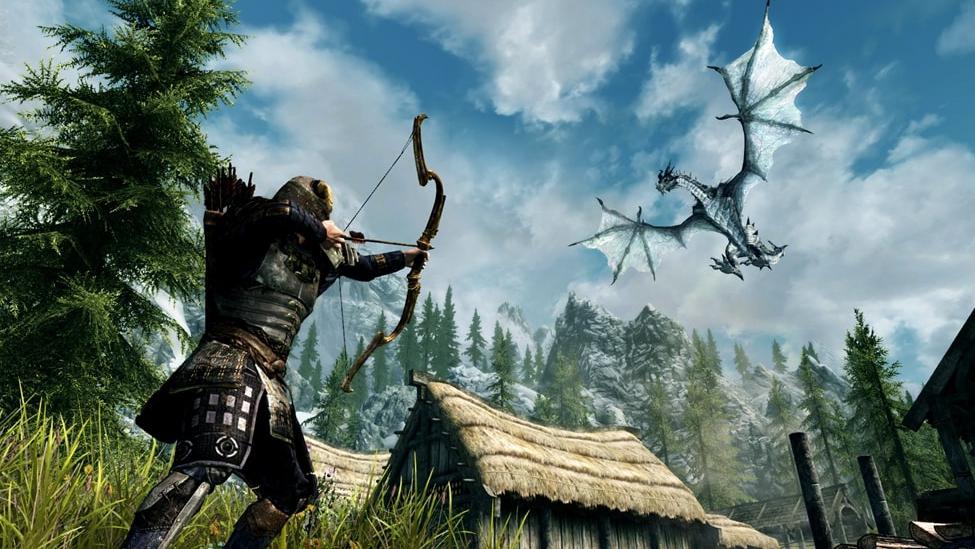
The user name was a reference to the computer game Elder Scrolls V: Skyrim. Picture: Bethesda Softworks
Devil in the detail
“If the correct username had been used at the start of the investigation, the subsequent steps in the investigation would not have led to Mr Klayme,” a three-member appeal panel has ruled.
Everything about the conviction hinged on a single “_”.
The girl’s mother noticed an “inappropriate” photo while checking her daughter’s phone.
She called police.
The 12-year-old admitted she had texted and talked with the predator in video chats. She provided a sketchy initial description of the offender’s features to police in 2018.
Dane County Sheriff’s Department investigators didn’t get to follow up on this line of evidence.
When time came up in their busy schedule to interview the girl, she was medically incapacitated with deep depression.
They picked up a phone and called for a digital forensic search on the one clue they did have: the username.
It came back with 125 Kik messages between the child and “fus__ro_dah”.
But it couldn’t bypass Kik’s anonymity feature (not a bug).
So, investigators subpoenaed Kik for the account’s records.
The name they submitted was “fus_ro_dah”.
Kik returned with Klayme’s email address.

Police in Halifax, Nova Scotia in Canada arrested Brandon Klayme in February 2020. Picture: iStock
Beyond reasonable doubt
Canadian police failed to find any evidence on digital devices they seized from Klayme while executing their search warrant.
They figured they didn’t need it. They had their man.
It was enough to have Klayme convicted at a 2023 hearing in the Dartmouth provincial court.
He protested his innocence. Nobody noticed the missing “_” in the sole piece of evidence they had.
Klayme was found guilty of sharing sexually explicit material with a minor, possession of child pornography, and attempting to lure a child into sex acts.
He was sentenced to 18 months in prison, with an additional 18 months probation.
He served the full term.
Klayme always insisted he was innocent.
He professed bewilderment at the accusation and conviction.
Klayme’s defence lawyer, Zeb Brown, agreed.
But it took a while to notice the tiny error.
“We noticed the problem when we were working on the appeal arguments this spring,” Mr Brown told CBC News.
“We were trying to figure out why the digital forensic evidence pointed at him given his denial of any involvement.”
An innocent man was jailed. Picture: iStock
Guilty until proven innocent
Klayme’s innocence has now been established with a rare degree of certainty.
“The police officer did not notice that the perpetrator’s Kik username “fus__ro_dah” contains a double underscore,” Klayme said in his appeal.
“This discrepancy went completely unnoticed at the trial. It was never brought to the attention of the trial judge.”
Canadian prosecutors decided to invest time in a double-check.
They eventually agreed his appeal had merit.
“This is not a situation where an acquittal is entered because the Crown has failed to prove beyond a reasonable doubt the essential elements of an offence or an error during the trial made the verdict unsafe,” the appeal court ruled last week.

The mistake ruined a man’s life. Picture: iStock
“In these circumstances, Mr Klayme is factually innocent of the offences. He should never have been charged, let alone convicted.”
The appeals court went one step further.
They identified a suspect.
Had the correct username been used, investigators “would have identified an individual whose first name is Jay whose IP address appears to be in California”.
“Although the information about the usernames was available at the time of the trial, there is no evidence confirming or explaining how it went unnoticed,” the ruling concludes.
Jamie Seidel is a freelance writer
Originally published by news.com.au on 31 July 2026