The Supreme Court said Scottish rape trials may be unfair
False Allegations Hub · 25 November 2026
Dr Stuart Waiton is a senior lecturer in sociology and criminology at Abertay University in Dundee. In October 2025 he invited Justice for Innocent Men Scotland, a group campaigning for men who say they were wrongly convicted of sexual offences, to address his criminology students. The university received more than 300 complaints, the event was condemned by rape crisis organisations and politicians, and the university distanced itself from it. A five-month investigation followed and found no breach, concluding that the session had been appropriate in the context of the module. He has since invited the group back, and this time Abertay has defended the decision. The interview below was prompted by a newspaper article about a remark he made in a lecture — the latest, he says, of several.
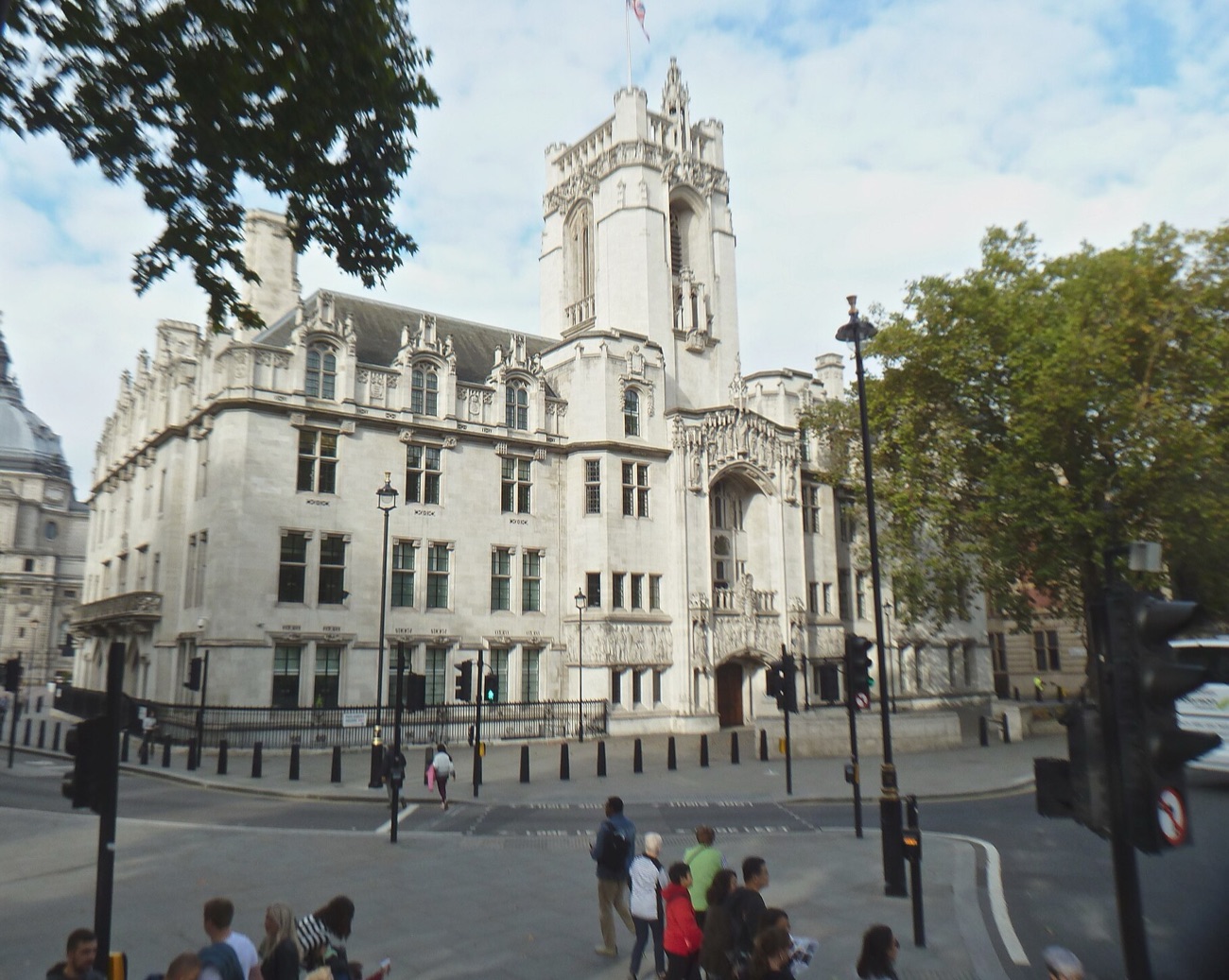
The substance of his argument concerns a judgment of the UK Supreme Court. In Daly and Keir v His Majesty’s Advocate, decided on 12 November 2025, the court considered how Scottish courts decide what evidence a jury in a sexual offence trial may hear about a complainer’s sexual conduct or credibility. The Law Society of Scotland and the Faculty of Advocates both intervened, as did Rape Crisis Scotland. The court held that the approach taken by the Scottish appeal court since 2013 is liable to infringe the right to a fair trial under Article 6 of the European Convention. That is a finding about the system, made by the United Kingdom’s highest court, and it has attracted little public attention.
What it did not do is overturn anything. Both appeals before it were dismissed: the court found that those two men had received fair trials notwithstanding the wider problem it identified, and their convictions stand. Waiton goes further than the judgment when he says that hundreds of men may be in prison after unfair trials, and it is a serious point he raises when he says that around forty men are now seeking retrials.
The route he is describing runs through the Scottish Criminal Cases Review Commission, which says the judgment opens the door to reconsidering convictions from 2013 to 2025 and expects the number of people affected to be substantial. In July 2026 Scottish Legal News reported that twenty people had applied to the Commission on the strength of the ruling — a figure Thomas Ross KC, the defence lawyer Waiton names below, said he was surprised was so low. Waiton’s higher number, given four months later, is his own and we have not been able to verify it.
The dispute matters beyond his case because Scotland has spent several years trying to raise conviction rates in sexual offence cases, and has been willing to alter the machinery of trial to do it. A pilot of rape trials heard by a judge without a jury, proposed after a review led by Lady Dorrian, was abandoned in 2024 for want of parliamentary support. A similar warning about the erosion of safeguards in Scottish criminal trials was made by Douglas McConnell in The Scotsman in October. Waiton’s claim — that a system which sets out to convict more people will end up convicting some who are innocent — is contested, and he states it more strongly than the courts have. The Supreme Court’s finding is not contested, and he is one of the few people drawing attention to it.
The interviewer is Mike Graham, and the recording is from his weekday morning programme, The Mike Graham Show. The clip was posted to X by Edward Graham.
This post reproduces opinion. The views expressed in the interview are the speakers’ own and are not endorsed by False Allegations Hub.
The interview
Mike Graham: Morning. How are you?
Stuart Waiton: I’ve had better weeks.
Mike Graham: So, well, haven’t we all. But what’s going on with your particular week? We’re talking about — your own words — you’ve had a row with some students about cat calling. Is that the problem?
Stuart Waiton: Well that’s, yeah, that’s the article. I’ve got this, I’ve got a kind of stalker journalist that works for the Times who needs to, like — he seems to like writing kind of student activist articles, hit pieces on me. And unfortunately, at the minute, I get a few — very few, odd one, usually student — who likes to go and run to the press and say if I crack a joke or use an anecdote or say something that doesn’t fit a kind of correct victim narrative. That’s what happens.
But underlying this, really, is that I’ve been doing a lot of work exposing that the Scottish justice system is a bit of a basket case, and there’s industrial scale miscarriages of justice in rape trials. Because rape trials are just — I mean, outrageous what’s happened with rape trials. And the Supreme Court has actually said itself that you can’t get a fair trial, pretty much, in Scotland. And I’ve been doing a lot of work on this, and I invited some women in to talk about it. And people hate these women. People hate this issue. And if you question any aspect of the kind of victim narrative, you end up with ludicrous stories like this popping up in the press.
Mike Graham: Yeah, right. So, I mean, is this all kind of been exacerbated by the whole Russell Brand case, and by what’s been going on in the papers, that’s kind of made everybody kind of sit up and take notice of it?
Stuart Waiton: Yeah, possibly it’s that. Exactly the same thing happened last year, so I got these women in from Justice for Innocent Men Scotland, who campaign about fair trials, basically arguing that you can’t get a fair trial — there’s possibly hundreds and hundreds of men in prison in Scotland. And the same thing happened: there was a student went to the papers about something else. So it’s not necessarily the Brand thing, but I think that kind of, it helps the kind of hysterical reaction when you’re questioning anything about anything to do with gender and violence, violence against women and girls, etc.
Especially — one of the things that’s quite interesting about this is the extent to which the conservative press are absolutely rubbish on it, which is very interesting, to try and work out why that is exactly. But whereas, you know, you were talking about two-tier policing before, I would say it’s absolutely clear there’s a two-tier justice system when it comes to the gender issue as well.
And rape trials are where it’s happened, where judges have basically been blocking evidence from getting to court. Because — and they’re quite upfront about this, as are the politicians — you can’t trust juries, because they’re essentially a basket of deplorables who believe in rape myths, and so we need to block evidence. That’s basically what’s been happening, which is why they tried to abolish juries in rape cases a couple of years ago.
And it’s just astonishing that you get politicians and senior legal figures being quite overt about their contempt for the Scottish people. And they argue continually that we need to increase the conviction rate. So not: we need truth, or justice. But: we need to increase the conviction rate. And so they’ve been falling over themselves for at least 15 years now to try and construct a justice system that gets as many men into court in the first place, often with no evidence, and then restrict as much evidence as possible from the jury, so that they’re more likely to increase convictions.
And that’s essentially — I mean, I’m stretching it slightly, but that’s essentially what the Supreme Court says, said, last year. And the politicians have completely ignored it. Judiciary has said nothing. Nobody’s resigned. There’s no media campaign, no interest in this issue at all. And it’s the biggest legal scandal, I would argue, in Scottish and possibly British history. And —
Mike Graham: The Scottish political system obviously is slightly different to ours, as is their legal system as well, right? So, so, I mean, is there any possibility that the British government could override anything that they’re doing, or is it completely sort of devolved in that sense?
Stuart Waiton: No. I mean, basically what, what’s happened is, the, the Faculty of Advocates and the Law Society of Scotland took, or contributed to, a case — the Daly and Keir case — last year, and they basically put it to the Supreme Court that Scotland is undermining the right to a fair trial, a fairly fundamental thing. And the UK Supreme Court said, oh yeah, you’re right.
So what’s happening now is that individuals — so there’s not, instead of what should have happened, is there should have been an inquiry into this. You know, heads should have rolled, judges should have resigned, politicians should have been outraged, and media campaigns should have started, to look into how many people are actually rotting in prison without having a fair trial. None of that happened.
So it’s been left for individuals, who now have to go through the system to try and get a retrial. So as far as I know, there’s 40 at the minute waiting. And of course there’s probably hundreds of men who’ve been in prison and being released, because this has been happening for 15 years now, where they’ve just been blocking evidence. So that’s where we are. As it happens, I suspect the case is not that much better in England, but, as everything, Scotland is more politically correct and more — it’s crazier, essentially.
Mike Graham: It’s also a much more cliquey nation, isn’t it? Because, I mean, I worked in Scotland for ten years, and you become, you sort of get to know everyone effectively who’s in any position of influence or power, whether in the press or the political world or, you know, sort of celebrities and all of that. You know, you see all the same people at all the same dos effectively. It’s quite a small, you know, setup, isn’t it?
Stuart Waiton: Yeah, I think, I think that is actually one of the problems. Once you get a kind of correct framework — so, you know, the correct framework today, to be multicultural, to be aware of vulnerability, you know, all things, you know, environmental, blah blah — and so, yes, as you say, that becomes a kind of a little kind of clique sentiment. And if you don’t express that, correct sentiments, if you’re not victim aware, if you’re not aware of just about everything, then you won’t fit in.
So there’s a, there’s a pressure on everybody, which is part of the reason, I think, that the conservatives up here are often so weak and wet, is because they’ve essentially become part. And certainly the press — I mean, the Daily Mail up here might as well be the Guardian, the Times in terms of article might as well be the Socialist Worker, sort of thing. So there’s not much scope or space for actually having these sort of discussions, which makes it difficult.
Mike Graham: Yeah, right. And so, are you a lone voice in the wilderness there? Does it feel like —
Stuart Waiton: Well, in academia. But there’s been a lone lawyer. So there’s a guy called Thomas Ross, who’s a KC, and he’s been speaking out for some time, and basically he stopped doing rape cases a few years ago because he said it’s impossible. It’s, it’s absolutely impossible. There’s no point in doing it. I mean, that’s how bad it is, right? You’re just saying it’s impossible.
You’ve got — I suspect this is happening with a lot of good long-standing cases by us as lawyers, that they just don’t want to take these cases, because they don’t, it’s an absolute waste of time for them. And you’ve even — all the research that’s done up here, of course, for the government, is done by feminist academics. And even there, there was a report in 2024 that actually bothered to ask lawyers, and you just had a stream of lawyers pulling their hair, say, I’m pulling my hair out, I don’t know what to do, this is a race to the bottom, this has been politicized, so on and so forth. So this is well known within the defense lawyer sphere, and ultimately that’s how it ended up the UK Supreme Court.
But politicians, not, not a single interest. They won’t touch it. You know: violence against women and girls — what, you’re gonna question that narrative? Not having it. None of them are interested. Media now, you listen — I mean, as I say, this is why the wolf whistle or cat call came out, is because they’re, they’re desperate to have a go at me and try and discredit everything about me. And this is the sort of got a journalist drag type article that they, they cling to. But it’s, it’s facilitated by the odd student.
Who — and this is one of the things, I mean, I, the whole course is on victimhood, victim culture, and trying to explore the kind of history and sociology of the rise of the victim. And one of the things about is, today the victim has got such a kind of quasi-religious moral weight to it, that if you feel outraged, you, any sense of decency disappears. And you think, yeah, I’ll just run to the newspapers, you know, I’ll be, I’ll become a kind of Maoist spy in a class where we’re meant to be having open academic discussions, and hopefully that academic will be, be canceled or sacked. You know, that’s, that’s the kind of world we seem to be living in.
Mike Graham: Yeah, it totally is. That nightmarish, absolutely nightmarish. Good to talk to you. Dr Stuart Waiton there, telling us about how he’s been victimized by the kind of woke is up in Scotland, and the establishment in Scotland, which is very woke and is very small and small-minded and cliquey as well. Coming up, we got Sarah White to talk to, and the week Les Gier poet as well, I think. Right, is that what we’re doing? So, I mean, should we do a bit of news first.
Originally published by The Mike Graham Show on 22 November 2026