The Framing of Rusty Rockets
Callum Watkinson · 1 November 2026
3. The Court Jester
Given what I know about the regime and its fluid attitude to consent, it was with no surprise that I observed the antics of Russell Brand in the late ‘90s and early ‘00s, following his adoption as regime court jester.
Was this guy entertainment establishment, or what? You could tell where he was headed back then: straight to national treasure status and a knighthood, even though some of his stuff was ‘a bit much.’ You could scarcely open a newspaper or turn on the TV without being confronted by his slightly-too-large front teeth grinning away, shirt open to the navel, falling out of some night club with his arms around one or two slender glamorous females.
Behind the scenes it was all happening for Brand, building alliances with some serious establishment types.
Kevin Lygo, for example - now the most powerful man in ITV, who was Channel 4’s director of television while Brand was being made a star on Channel 4 and E4. Brand thanks him by name in the acknowledgements of My Booky Wook. On his watch, in 2009, a staff member complained about Brand. Channel 4’s own review found the complaint ‘was not passed up Channel 4’s senior management chain’. You may draw your own conclusions about how convenient that ceiling is.
Then there’s Lesley Douglas, controller of Radio 2, who brought him to the BBC. ‘Lesley had said they’d let me do whatever I want,’ Brand wrote. Paul Gambaccini, who was in the same building, put it more bluntly on Radio 5 in 2008: ‘He was her pet and she let him get away with so many outrageous things.’ The BBC’s own review, authored by its Director of Editorial Complaints and Reviews, Peter Johnston (years later) found staff perceived Brand to have ‘a direct line’ to her, that she ‘would be expected to back him’, and believed he ‘would get his way and would go, or threaten to go’ to her if not.
In 2007, when a staff member formally complained about Brand urinating in the studio and throwing things in anger, Johnston’s review found it ‘likely’ the complaint was raised with Douglas. Nothing was done. Instead the BBC press office, having consulted ‘C R2’, told the papers: ‘Russell did urinate in a cup in the studio, and someone has shown him where the toilet is.’
The review never names Douglas. She is ‘the then-Controller’ throughout. When the BBC’s own press log records that the press office checked the toilet statement with ‘C R2’ (the BBC’s internal shorthand for Controller, Radio 2, a job only one person held), Johnston will go no further than finding that ‘more likely than not’ this meant her.
That is cushioning not caution. The report admits that those it might criticise were shown its findings in advance and invited to argue, and that Douglas made representations, dismissing the evidence against her as ‘unspecific hearsay’. Johnston admits he changed his draft in response to some of what he was told. He doesn’t say which bits. My guess is that ‘more likely than not’ wasn’t in the first draft.
Above Douglas sat Mark Thompson, the Director-General, now running CNN. In 2023 he said that if he ‘had learned of other issues’, he’d have acted on them – and the BBC’s review agrees he didn’t learn of them: it found ‘no evidence of awareness of complaints about Russell Brand beyond the direct station management level’. Which is precisely what Channel 4’s review found about its own senior people. Two institutions, two self-investigations – the BBC’s carried out by a team drawn from its own HR and legal departments – and in both the complaints stopped just below the men who went on to run ITV and CNN. Again, draw your own conclusions. It’s all regime media.
Speaking of regime media, let’s bring in Sir Peter Bazalgette, the Big Brother king and knight of the realm, whose Endemol made the Big Brother spin-off shows Brand presented on E4. When Sachsgate broke in 2008, Bazalgette leapt to the defence in Prospect: Brand and Ross were ‘paid quite a lot of money to be risqué’. He went on to chair Arts Council England and ITV, and collected a knighthood. A review commissioned by Endemol’s successor company found that concerns about Brand on those shows had been ‘raised informally with senior members of staff’, that crew felt largely unable to complain, and that his behaviour was tolerated as ‘Russell being Russell’. The review does not say who those senior staff were.
Then there is geriatric bond villain Rupert Murdoch with his inexhaustible fetish for interfering in the public life of Britain. His Sun newspaper named Brand its ‘Shagger of the Year’ three years running. Brand’s publisher (Murdoch’s HarperCollins) printed this proudly in his author biography. Murdoch’s FX gave him his own American TV show.
Boris Johnson shared a Question Time panel with him and later used his Telegraph column to call him ‘Brandy Wandy’, ‘a nice chap’ and ‘such fantastic news for the Tory party’, adding he’d be ‘thrilled’ if Brand ran for Mayor of London. Keith Vaz had him give evidence to the Home Affairs Committee. Ed Miliband went round to his house for an interview in the middle of a general election campaign, cheered on by Alastair Campbell, who said Brand had ‘political antennae, something close to a worldview’. The New Statesman handed him an issue to edit and celebrated record traffic. Jeremy Paxman, having grilled him, told the Radio Times that ‘part of Russell Brand’s diagnosis is right’.
In 2015 Prospect – one of the regime’s supposed thinking-man’s magazines – ranked Brand the fifth most important thinker in the world. Academics were soon writing him up in international relations journals as a figure of ‘global resistance’. (This was all going on when the progressive left assumed Brand was going to recycle, mindlessly, its bullshit because he had long hair and an Essex accent.)
Even Charlie ‘Sausage Fingers’ Saxe Coburg nearly got involved in the ‘recruit-Russ-to-the-regime effort (You may have heard of Charlie, boss of the feared Windsor crime family.) According to the Mail’s Ephraim Hardcastle, Charles had been considering making Brand an ambassador for the Prince’s Trust, to ‘appeal to youth’.
He was the regime’s fool, and a damn horny one: regime-made, regime-sold and regime protected, and a big part of brand Brand was this… what word shall we use?…interpretative attitude to consent. I think we can all agree that Russell Brand interpreted consent in ways that men who are not devilishly handsome, smooth tongued, wealthy, famous, establishment princelings backed by Kevin Lygo, Lesley Douglas, Mark Thompson, Rupert Murdoch, Sir Peter Bazalgette and Boris Johnson perhaps don’t. I think it’s also possible that the women Russell Brand met during this busy, shagging stretch of his life, interpreted him very differently to the way they interpreted other men, too.
The complaints at the time went where complaints against establishment figures go in this country – nowhere. ‘Handled internally’, as a Cambridge college might say. This is how the British establishment protects its own, and for a while back there, Rusty Rockets was very much its own - its own well celebrated shagger, mark you, who, as Peter Bazalgette points out, was paid to be risqué. Paid handsomely, and very much its own. Until he wasn’t.
So what happened? Well, a few things. Brand got clean from drugs not long after the turn of the millennium, and the twelve step programme was a big part of his recovery. The date I can find most often cited is December 2002. The twelve step fellowship places great emphasis on honesty, open mindedness and willingness. Alcoholics Anonymous calls them ‘the essentials of recovery’. Narcotics Anonymous describes them as principles without which recovery is not possible.
Then, in the autumn of 2013, the jester turned on the court. He used the GQ awards to mock Boris Johnson’s Syria jokes and the event’s sponsor’s Nazi past, guest-edited a left-wing magazine to call for revolution, told Paxman not to vote, and called Murdoch an ‘animatronic al-Qaida recruitment poster’. Murdoch’s papers, he complained, had loved him while he was a joke and turned on him the moment he spoke up for ordinary people.
I’m not sure he knew what he was starting, then. I think he does now. But that wasn’t the moment Rosamund Urwin at the Times started to investigate him. That didn’t happen until 2019. She later wrote that she worked on the investigation ‘alongside my day job, first as Brexit correspondent, and then as media editor.’
What first put Urwin onto Brand, she doesn’t say in that Grazia piece. At the time, Urwin was the Sunday Times’s Brexit correspondent, and that August somebody in Whitehall trusted her enough to hand her the government’s secret no-deal planning papers, codenamed Operation Yellowhammer. Not everyone gets that phone call. Sounds like a trusted regime journalist.
Before we move on to how Ms Urwin’s investigation morphed into a multi channel exclusive with a police investigation flowing almost seamlessly therefrom, let’s talk about the numbers. As Brand leaned harder into the honesty, open-mindedness and willingness of his recovery, saying out loud the things the court preferred unsaid, his audience grew. Fast.
In July 2013, a few weeks before the GQ awards, his YouTube channel had 38,735 subscribers. A year later, after Paxman and the revolution issue of the New Statesman, it had 239,230: more than BBC News, whose own YouTube channel had 220,372 that month. By July 2015, with The Trews going out three times a week, Brand had 1.17 million. One man and a camera had overtaken the world’s biggest broadcaster on the platform where its future audience lived.
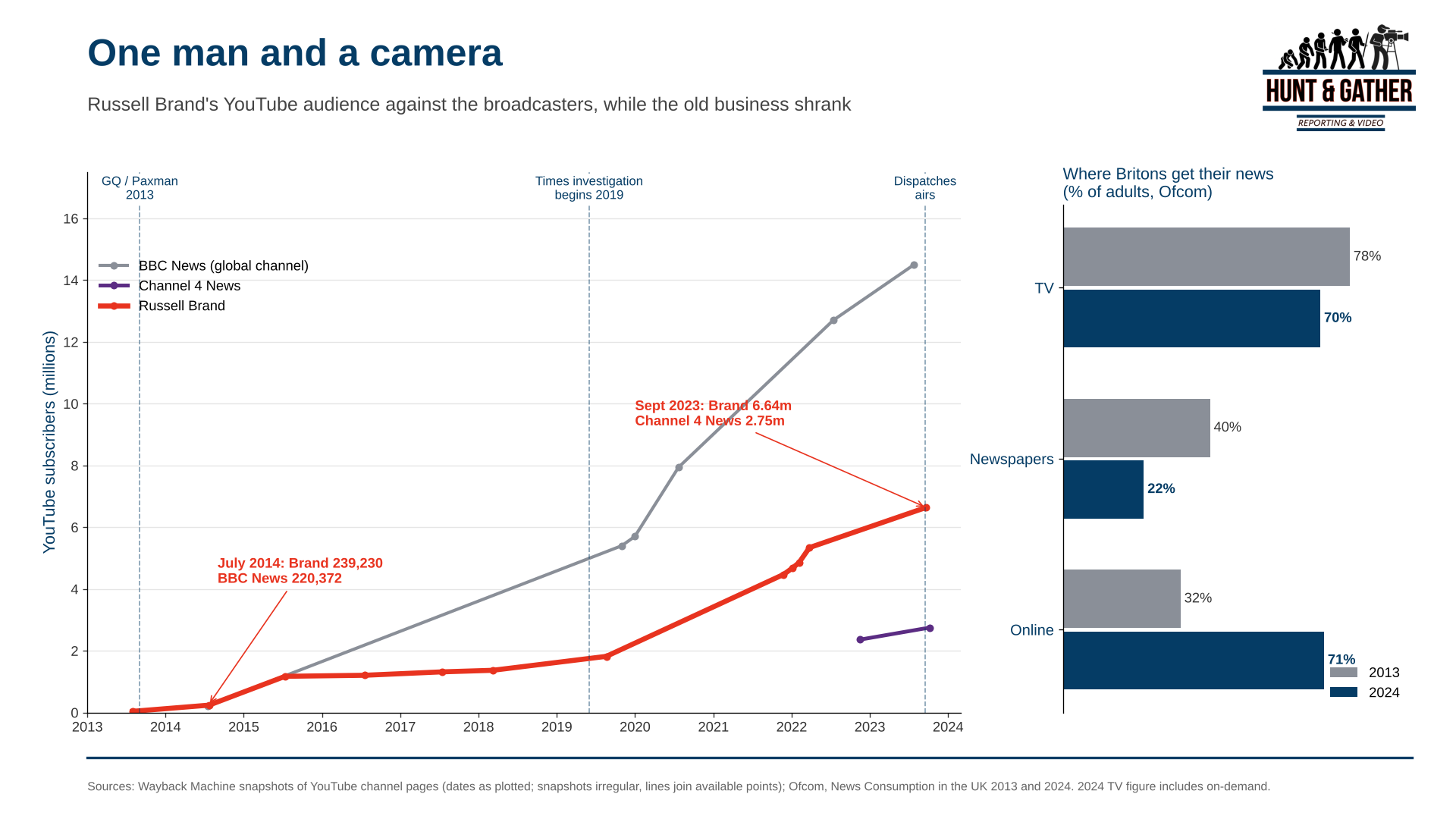
This chart shows Brand’s Youtube growth in red, BBC News’s YouTube growth above it and Channel 4’s - the teeny line down at the bottom right. The bar charts show the decline in TV news watching and newspaper reading over the same period
His audience levelled off for a few years, then took off again. By August 2019 it was 1.8 million. By late 2021, after the pandemic, it was 4.5 million. In September 2023, the week the allegations broke, it stood at 6.64 million, more than twice the YouTube audience of Channel 4 News.
The BBC knew where the audience was going. It spent the same decade pouring resources into YouTube, taking its News channel from 220,000 subscribers to 14.5 million. This was a race, and everyone in it knew that. The difference was that the BBC had a newsroom of thousands to keep in business class flights. Brand had a camera, a microphone, the platform the industry had given him and a decade of recovery.
Over the same decade, the entire business that made Brand was shrinking. In 2013 (the year Brand had a public falling out with Murdoch) 78 per cent of Britons got their news from television and 40 per cent from newspapers, according to Ofcom. The internet trailed on 32 per cent. By 2024 online had overtaken television for the first time, and just one young person in ten read a newspaper. In the decade to 2020, sales of national daily papers more than halved, from 16.4 million to 7.4 million. Murdoch’s Sun, which had crowned Brand its Shagger of the Year, lost nearly sixty percent of its readers.
The more honest Brand got, the bigger he got. The bigger he got, the smaller they looked.
I want you to look at this information and understand something: the animus of the regime media towards Russell Brand is primarily about money. An ITN deployment to cover, say, the earthquake in Haiti would involve dozens of people and probably cost north of one hundred thousand pounds. These organisations have held a privileged position for decades, whereby they produced content in this bloated and wasteful way and enjoyed a monopoly.
When the likes of Russell Brand, Tommy Robinson and armies of lesser known journalists came along and started doing a better job - and generating lots more views - with an iPhone and a mate or two, they exposed an uncomfortable truth: turns out a ‘journalist’ is just someone who sees something going on and tells everyone else about it. No press pass required. Now that everybody has a camera, everyone who is standing next to a really interesting event can be a journalist, and beat the very important journalists at the BBC, Channel Four, Sky etc.
This makes everyone who works at those places feel very very frightened, and very angry with the people doing it. Their entire financial infrastructures depend on ‘ordinary people’ from Luton and Grays NOT being able to produce news; and if they do produce it, being steadfastly ignored by audiences. If everyone is a journalist then no-one is a journalist, and they are all out of a job. That’s their skin in the game.
Might the regime have had any other issue with a man who had made honesty, open-mindedness and willingness central to his life, and who controlled a fast-growing news channel, in 2019? Was there anything on the horizon that might have made a truth-obsessed man, who called his early show ‘The Trews’ and his later one ‘Stay Free’, a problem? Gosh. Gee whizz. I don’t know.
Even if you are still buying the official narrative about Covid you can accept my account of what happened next because it’s all from the regime’s own record. Whitehall set up units to monitor what people were saying about Covid. The Cabinet Office, the culture department and the Army’s 77th Brigade logged the critical comments of journalists, academics and MPs, among them Peter Hitchens, David Davis and Andy Burnham. Government behavioural scientists advised that ‘the perceived level of personal threat needs to be increased’. Senior scientists privately entertained the possibility of a lab leak origin for the virus while publicly dismissing it as a conspiracy theory. In a world operating like that, an honest, open minded and willing man with millions of subscribers asking questions about all of it was not welcome, to put it mildly.
Anyone who has been following Hunt & Gather for a while knows I believe we were lied to, hard and long, about all of that. That’s based on things I’ve watched and read. If you want to make up your own mind, the work is out there, and I’d urge you to read and watch it.
This piece is about Russell Brand - a reformed regime jester with a gob and a platform, both of them large and one of them growing fast, as the pandemic hit in 2019. That’s when Rosamund Urwin, with her Whitehall contacts, felt moved to begin her investigation.
4. The First Account
When someone alleges a sexual offence, the first account they give matters more than any other. That isn’t my opinion, it’s built into every part of the system that will later judge them.
The police’s own national guidance on interviewing victims and witnesses, Achieving Best Evidence, treats that first account as the foundation of the whole case: an investigation ‘could hinge on it’, and the chance to get it right is ‘lost’ once it has gone. Officers are told to find out what the witness has already told anyone else, and to record every early conversation in full. The entire framework is clear: the ideal is that the police get there first.
Parliament has gone further. Under section 107 of the Criminal Justice Act 2003, where evidence of other alleged misconduct has been put before a jury that turns out to be ‘contaminated’, the judge must stop the case or order a retrial if a conviction would be unsafe. And Parliament defined contamination with care. Evidence is contaminated where, ‘as a result of the person being aware of anything alleged by one or more others’, it ‘is false or misleading in any respect, or is different from what it would otherwise have been.’
Read that again. Not lying or collusion but simply knowing what others have said can be enough to change what a person remembers, and the law says so.
The scientists agree. In 2008 the British Psychological Society published guidelines on memory and the law, launched at the Law Society itself. The chair of the committee that wrote them warned that memories are records of people’s experiences rather than of events, that they can contain details the person never experienced, and that ‘the accuracy of a memory cannot be assessed without independent corroborating information’. In June 2023, three months before Dispatches aired, the British Academy published a report for ‘busy legal and criminal justice professionals’ on the same subject, including ‘the effects of suggestion and misinformation’.
And a senior judge has already told the Metropolitan Police exactly where the danger lies. In 2016 Sir Richard Henriques reviewed Operation Midland, the investigation built on Carl Beech’s claims about a VIP paedophile ring. He found that the complainant had been shown photographs of suspects, ‘hopelessly in breach of PACE’, the rules the police themselves must follow, and warned that it would have made convictions ‘impossible’. Once allegations are public, he wrote, ‘all subsequent complainants are exposed to the assertion that they have been influenced to make their allegation.’ He criticised the use of publicity as ‘flypaper’ to draw others in. And he told the Met to stop instructing officers to believe complainants, because it ‘reverses the burden of proof’. ‘The temptation,’ he quoted, ‘is strong to fit the facts to the story.’
So the rule is clear, and it is the system’s rule, not mine. The first account belongs to the police. Anything that comes before it, whether a conversation, a story or a programme, risks changing it, sometimes without anyone meaning to.
So a question I have for the regime journalists who put this story together is this: how did this case get to the police? Let’s start with how the journalists found the women.
The Times’s head of investigations, Paul Morgan-Bentley, told Sky News the week the story broke: ‘Lots of people across the media industry have heard rumours about his alleged mistreatment of women over the years. We started looking into it and speaking to people who had relationships with him, people who’ve worked around him.’ It was ‘a source putting [us] in touch with [another] source putting [us] in touch with a friend… These are women that we then approached.’ The Sunday Times’s own investigation puts a size on it: ‘Over the past few years, reporters have interviewed hundreds of sources who knew or worked with Brand: ex-girlfriends and their friends and family.’ Hundreds of sources. Ex-girlfriends. Years.
To get these women in front of a camera, the journalists went looking, and the women they found did not go to the police. The paper says so: ‘All said they felt ready to speak only after being approached by reporters.’ On the day of publication the Metropolitan Police said it had ‘not received any reports’. The judge has told the jury the women in the documentary were not prepared to speak to the police at all, and their allegations are not part of this case. All six women in the prosecution came forward after the broadcast. So what were they responding to?
The programme said on its end card: ‘If you have a story email [email protected]’. A story. Not a crime. No mention of the police. Channel 4 also built a web page that did mention the police - but down the bottom. ‘If you wish to provide information about allegations raised in… Dispatches,’ it says, ‘below are details of the services to confidentially share your concerns.’ There are three. First, Channel 4’s own investigation, through a confidential line whose reports reach ‘Channel 4 within 24 hours’. Second, ‘If you would like to provide information – in confidence – to the journalists investigating this story’, an email address for Dispatches. Third, and only third, after a bit of scrolling: ‘If you have information regarding an alleged criminal offence’, the Metropolitan Police. Channel 4’s statement on the same page ends: ‘we would encourage anyone who is aware of such behaviour to contact us directly.’
The Times was taking calls too. Its investigation, published on the Saturday, ends: ‘If you would like to get in touch with the reporting team behind the investigation, email [email protected].’ No police number. No helpline. On the Monday, Rosamund Urwin said the paper had received ‘a huge number of fresh leads’. ‘We have to corroborate those allegations,’ she said. ‘That takes a huge amount of work.’
Remember the Achieving Best Evidence rule, please. The first account belongs to the police. Channel 4 put the cops third on the website and left them off the end card. The Times didn’t mention them.
So from the beginning the journalists’ method was to seek women out. After publication they kept doing it, through ‘fresh leads’, and through an invitation to share concerns ‘in confidence’ with the journalists placed ahead of an invitation to go to the police. Here’s my question: did the six women on whose accounts this prosecution was built reach the police direct or through the journalists? It’s not been asked or answered in anything I’ve read. I hope the jury has asked it.
Everybody who would know the answer has spoken about this case. Their words on the matter are very careful. The day after publication, the Met said it had made further approaches to the Sunday Times and Channel 4 ‘to ensure that any victims of crime who they have spoken with are aware of how they may report’.
When it charged Brand in April 2025, the Met said it had acted ‘after receiving a number of allegations, which followed reporting by Channel 4’s Dispatches and The Sunday Times’. ‘Followed’ describes a time and avoids the route.
The Crown Prosecution Service said the same: ‘allegations made following the broadcast of a Channel 4 documentary’. When two more women were added in December 2025, the CPS called them ‘separate reports of non-recent offences in 2009’.
Rosamund Urwin asked the question herself, in Grazia: ‘Why would they prefer to speak to a journalist than to the police?’ Her answer: ‘The answers are, of course, individual.’ Then she gave statistics. On the reporters’ contact with the women, she was clearer: ‘That care continues months and even years after publication.’
Alex Mahon, then Channel 4’s chief executive, told MPs that ‘any allegations about criminal activity go straight to the police’. She was talking about Channel 4’s whistleblowing line, not the documentary’s sources. Later she thanked ‘the people who have bravely come forward’. Come forward to whom?
The Times’s Sean O’Neill wrote that the reporting ‘forced the police to open an inquiry.’ Would they have opened one otherwise? Was the guidance about Achieving Best Evidence followed by the reporters, during this ‘forcing’ of the police?
The prosecution opened by telling the jury that six women ‘had come forward independently’. Independently of each other. But of the journalists? In closing it said the women ‘have not taken part in a documentary’. They weren’t on screen, but they could have been spoken to during production. The question hasn’t been addressed.
And at the top of the chain, the judge. Mr Justice Bennathan told the jury that all six ‘came forward after the 2023 documentary’, that the women in the documentary ‘were not prepared to speak to the police’, and that their allegations are not part of this case. He called the documentary ‘one-sided’. ‘After’ is, again, a word that describes a time, not a route. When, not how.
Every one of these statements is true. Every one is careful. All of them are careful not to answer the question of whether these six women went to the police direct, or through the journalists.
5. Digital Book Burning
What I’ve just described is a concerted attempt by regime media companies, beginning in 2019, to ensure a significant commercial rival is committed for rape and sexual assault, with the assistance of other regime bodies, particularly the CPS and Metropolitan Police.
Here are some ‘greatest hits’ of framing by the Met: the Maguire Seven (jailed over bomb traces and cleared in 1991), the Tottenham Three (cleared when Winston Silcott’s interview notes were found to have been altered), the Mangrove Nine (acquitted of riot), Colin Stagg (targeted in a honeytrap the judge called ‘deceptive conduct of the grossest kind’), Barry George (convicted of Jill Dando’s murder on a single particle and acquitted at retrial), Paul Gambaccini (arrested and kept on bail for a year so that his name in the papers would draw in more accusers – the ‘flypaper’ tactic, as he called it – with no charge at the end of it), and Liam Allan (charged with 12 rapes and sexual assaults while the Met sat on the messages that cleared him). It’s one of the most corrupt organisations in the history of this country and it should be disbanded, and everyone who works for it banned from public sector employment for life.
Before I go on, I should first say a word about contempt of court. As I have said in this column before, I have nothing but contempt for the English courts because of the abuse they have meted out to Hazel Walker in her quest for a reasonable divorce settlement from her ex husband, a wealthy regime lackey.
Contempt of court is serious, but less so depending on who you are. Last week I told a story about some reporting I was doing in Stafford in May 2018, and how I almost fell foul of the Contempt of Court Act and an angry judge. As a minor regime figure - an ITV reporter - I was sent home with a slap on the wrist. What I couldn’t tell you last week was that Tommy Robinson was sanctioned the same month under the same law, for doing something similar, and was sent straight to prison.
I’ve earned my contempt, but if you are a juror on the Brand case, what the hell is wrong with you? Have you not heard the judge, Mr Justice Bennathan, warn you many times throughout this trial that you should not be consuming media about it? You must stop reading immediately. You wouldn’t want to be sent to jail like Tommy Robinson, would you? If you have read this article you should disregard any points it makes when you are deliberating and you should stop reading.
I am not judging the evidence but the system. I have a problem with a man being put on trial for rape after a concerted witch hunt by his former employers, over behaviour they used to encourage. If it turns out that the complainants were triaged by the journalists I don’t see how any conviction of Brand can be safe.
The reason for this circus is not justice for these women. As we have explained, regime hangers on of the type who are driving this process place no value on women, and see them as disposable trash. This is about record curation and I will explain what I mean with an example from my own life.
In 2013 I won an award from the Royal Television Society in the Midlands. I was presented with a rather attractive lump of transparent resin with the RTS logo and my name on it. The RTS proudly published details of my victory online.
In 2023 I left ITV under something of a black cloud. I had been investigating some regime judges over their corrupt handling of a case, and regime broadcaster ITV didn’t agree that I should be. We parted company on less than favourable terms, and I am still investigating the circumstances. Some time after that, the record of my victory was scrubbed from the current RTS Midlands website. I have a copy from the Wayback Machine, and I still have the trophy. But the internet no longer records that I was the RTS Midlands Television Journalist of the Year in 2013. That information will be lost to history.
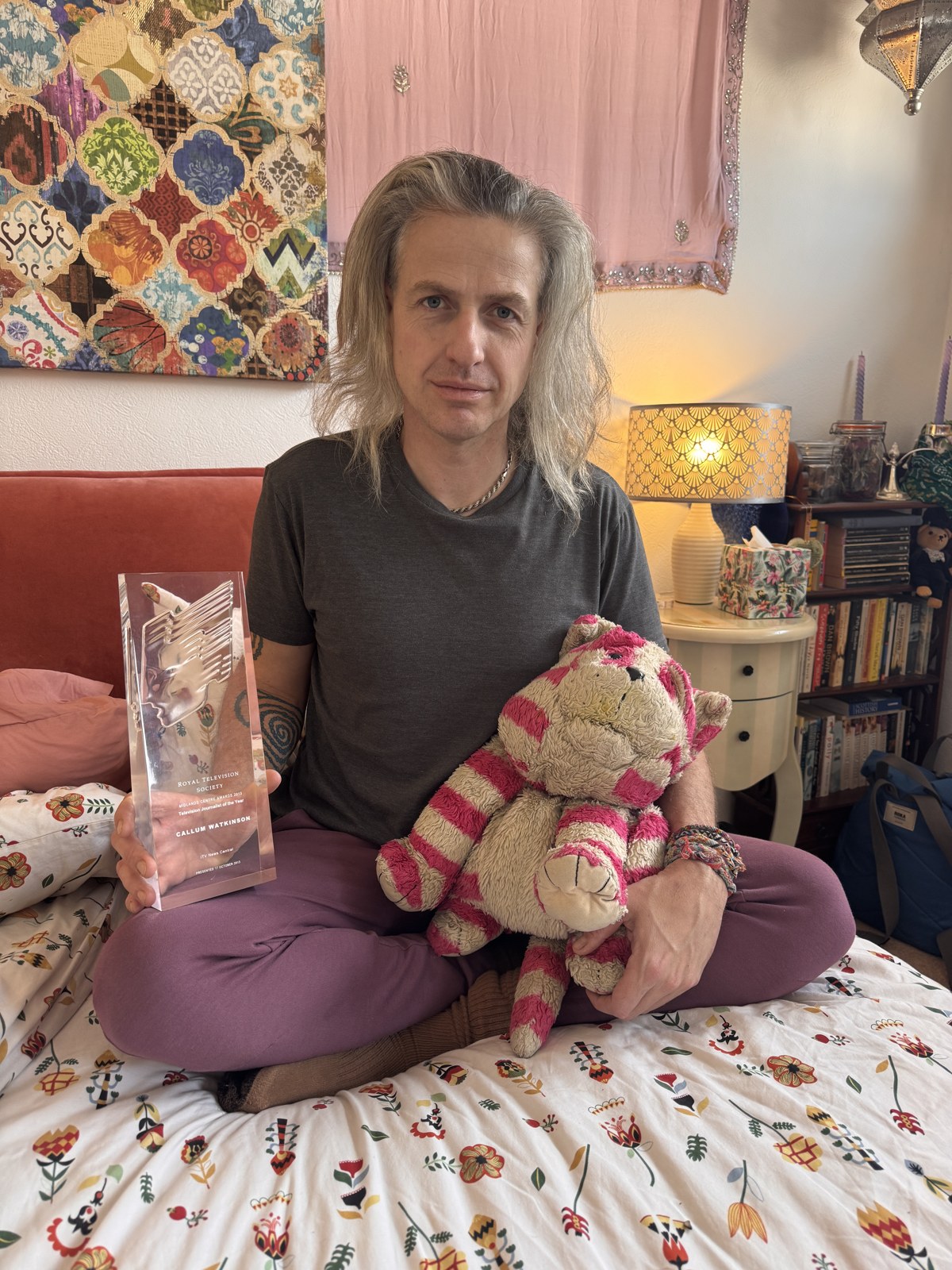
Me with my RTS award that I won in 2013, and Bagpuss
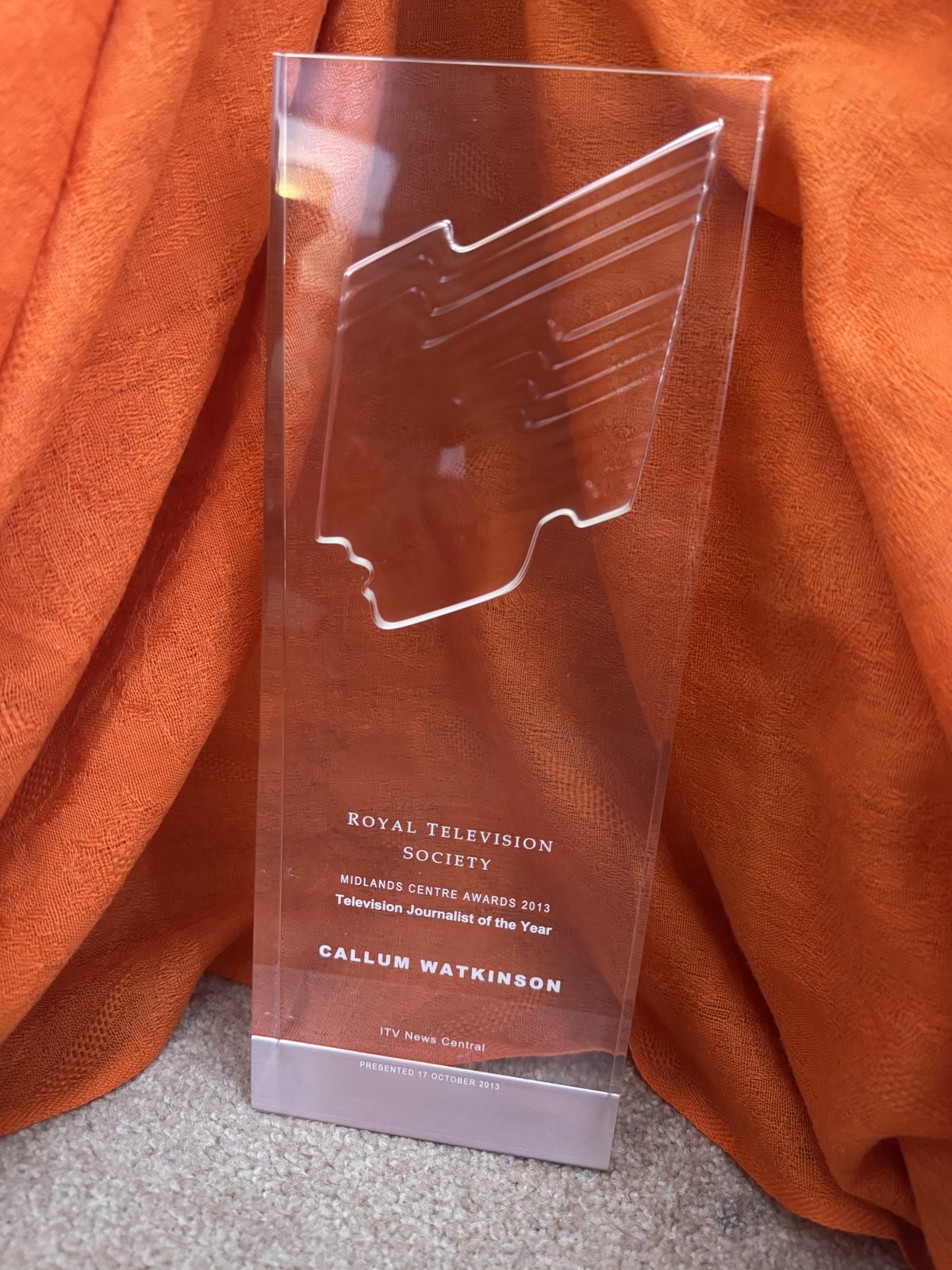
Was it just am imagining? Dreams of these acrylic statuettes are what drive mainstream journalists forward towards glory everlasting
When it comes to Rusty Rockets, here are two accounts for you:
1. In the late nineteen-nineties and early years of the twenty-first century, Russell Brand used his fame to get sex. He has said so himself, on oath: ‘As I became more successful and famous I was very comfortable allowing that to facilitate sexual access,’ which, he agreed, ‘was wrong’. He called it ‘beyond reckless philandering, and idiocy’. He was The Sun’s ‘Shagger of the Year’, three years running. He left lewd messages on Andrew Sachs’s answerphone and cost Lesley Douglas her job. His stand-up persona could be characterised as misogynistic: he built a career on jokes about the women he’d used. He was a self-styled ‘wellness guru’ and ‘conspiracy theorist’ feeding information characterised as false and dangerous by the mainstream to millions, until YouTube cut off his advertising money. He was accused of rape, sexual assault and abuse by four women in a joint investigation by The Times, The Sunday Times and Channel 4. He was charged with rape and sexual assault. Some of his programmes were removed from the BBC’s iPlayer and Sounds.
2. Russell Brand was a heroin addict who got clean in 2002 and has stayed clean - one of the most high profile living examples of the power of twelve step recovery. His story has inspired unknown numbers of other addicts to get clean. He wrote a book to help others find recovery, opened a café in Hoxton staffed by people in recovery and made a documentary for the BBC on addiction and recovery. He ran rings round MSNBC’s Morning Joe, sat across from Paxman on Newsnight and won the argument, gave evidence about drug abuse to a House of Commons select committee and took on Farage on Question Time. He stood with the tenants of the New Era estate in Hoxton when an American investor tried to price them out of their homes, and won. He came home from Hollywood, picked up a camera and built the most-watched dissident voice in Britain, asking the questions the BBC wouldn’t - particularly during the pandemic era, when many citizens of the British Isles found solace in his truth telling as their government, and the BBC, lied to them repeatedly. He changed the commercial face of UK media for good in the process. The emphasis that the twelve step programme places on redemption and personal growth seems evident in Brand’s own public transition from wild man to family man; by 2017 he was living quietly in Oxfordshire with second wife Laura and raising children, with public tales of his womanising long in the past.
Both of the above accounts are true. What you are witnessing is a desperate bid by the regime to make sure that only the first version is recorded for history, that it has a punchier ending and that it therefore drowns out the second. Just as history will forget my RTS award, the regime wants it to forget the good things about Russell Brand. The reason is obvious: you will then forget, they hope, the things that he told you, about Covid vaccines and all the rest. What’s so tragic is the absurdity of trying to pre-edit history in this way. It can’t be done.
Rockets himself wouldn’t mind both the above accounts being preserved for history. That’s the difference between the two sides here. I can tell you that without meeting him, because he has done a step four inventory and owned his faults. If he hadn’t he wouldn’t be clean. Whether he’s made proper amends to all persons he has harmed is another matter, and something I’d like to ask him. Given all the shagging it is probably a long list.
Those who seek to control what the future knows of the past in this way should keep in mind the story of Herostratus, as told by the Roman writer Valerius Maximus. In 356 BC Herostratus burned down the Temple of Artemis at Ephesus, one of the Seven Wonders of the World, for no better reason than to make his name live forever. The Ephesians tried to deny him that: they passed a law forbidding anyone, on pain of death, ever to speak or write his name again. A historian called Theopompus wrote it down anyway, Valerius Maximus repeated it four centuries later, and here I am writing it 2,400 years after that. The temple is rubble, the name they tried to ban survives - because they tried to ban it. You can scratch a face off a portrait, wipe a page from a website or strike a name from the record, but the gap always gives you away. History has a long memory, it doesn’t take orders and it doesn’t give a flying fuck about contempt of contemptible courts.
To repeat: none of this article is a judgement about the veracity of the claims currently before jurors at Southwark Crown Court. I haven’t followed the trial. Those twelve must make up their minds on the evidence they have heard, and the judge has warned them about that many times.
So enjoy the remainder of the show: the sequel to last week’s stringing up of Tommy Robinson. The regime is working hard to convince you that everything is fine.
We hope that every woman who was hurt by her time with Brand recovers from that experience.
We wish Mr Brand continuing freedom from the disease of addiction.
To any women who have been raped by Rapey Richie Hamilton (not his real name) since we all graduated in 2000: I’m sorry. I think about you sometimes.
To the regime media who believe that they can suppress alternative voices by colluding with the police, in a world where everyone has a studio in their pocket, I say only this: let’s see, shall we?
Originally published by Hunt & Gather on 1 November 2026