Death Penalty Supporters Say There’s No Proof of the Innocent Being Executed. Virginia Might Prove Them Wrong.
Austin Sarat · 14 August 2026
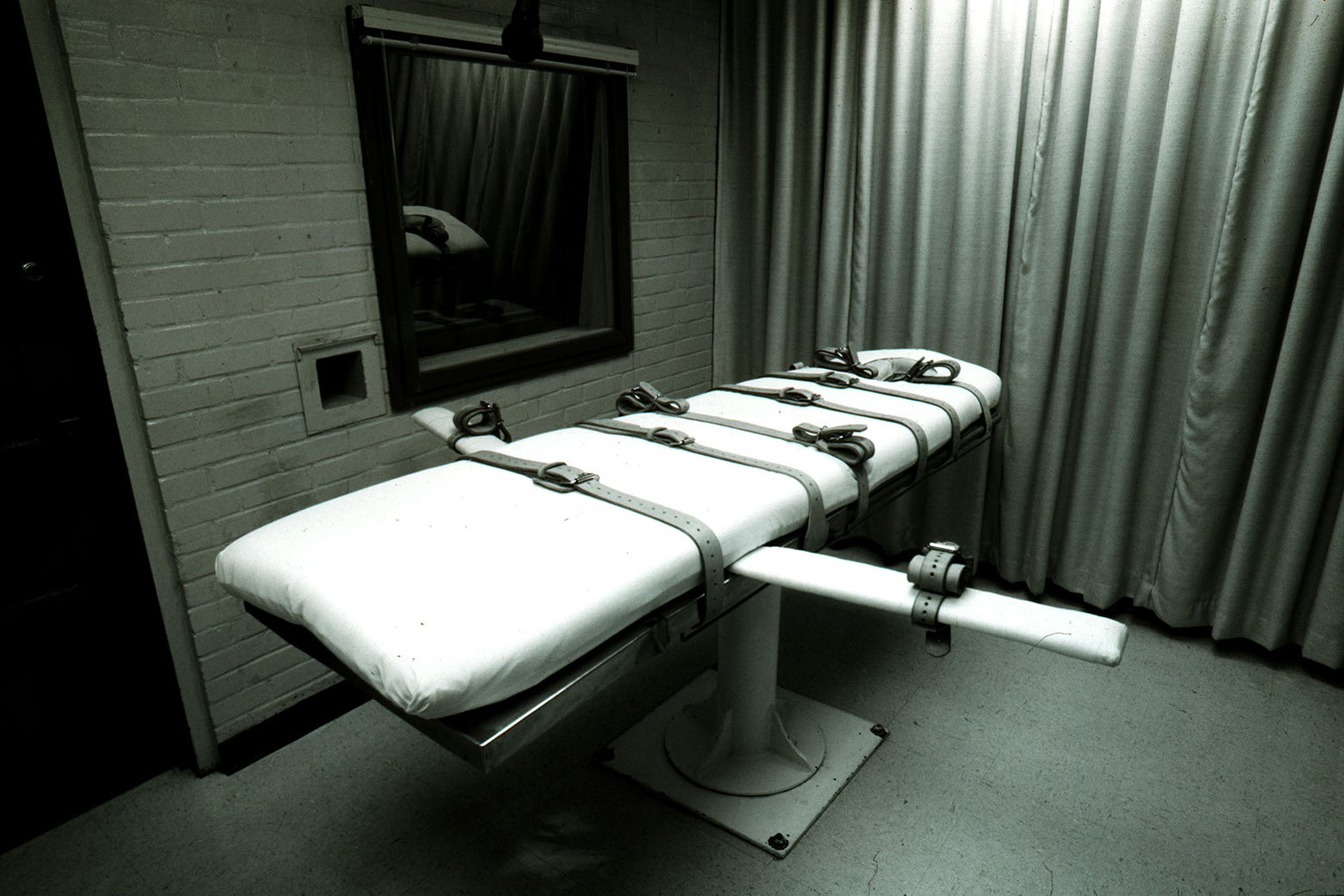
Per-Anders Pettersson/Liaison
The possibility of executing the innocent has gone a long way to change the national conversation about the death penalty. We know that over the past half-century, more than 200 people have been exonerated after having been sentenced to die, and scholars estimate that 4 percent of those sentenced to death are innocent.
And a 2021 Pew poll found that 78 percent of its respondents believe “there is some risk that an innocent person will be put to death.” But death penalty supporters have long contended that abolitionists have sold the public a false bill of goods.
One of them, Judge Morris Hoffman, argues that “To a large and unfortunate extent, the debate about wrongful convictions in a capital context has become a proxy for arguments in favor and against the death penalty. Lost in the crossfire is any reliable data about the actual wrongful conviction rate.“ He contends that no one has yet come up with “a single case of a demonstrably innocent person executed in America in the modern era.”
Hoffman claimed the “label innocent” is “just a way of saying there were errors in the trial, that guilt seemed to them to be a ‘close call,’ and that some of those close calls must surely, as a statistical matter, have involved some factually innocent people.”
Even the abolitionist Death Penalty Information Center concedes that “there is no way to tell how many of the … people executed since 1976 may … have been innocent.”
All of this may soon change. Virginia, which abolished the death penalty in 2021, recently initiated a review of eight cases of people executed there between 1986 and 1998 whose convictions were obtained based on testimony and evidence presented by a now-discredited state forensic scientist, Mary Jane Burton.
The results of that investigation could transform the death penalty debate by offering more evidence about our ugly recent history of executing the innocent.
Only once before has an executed person been exonerated posthumously by a state entity. That happened earlier this year when the Dallas County Commissioners Court ruled that Tommy Lee Walker was innocent, 70 years after he was put to death by the state of Texas.
The court found that “the totality of the evidence and information … supports the conclusion that Tommy Lee Walker’s conviction was not only obtained unlawfully … and, further, the evidence and information presented raises serious questions that call into doubt his very culpability.”
“This County,” it added, “deems it a moral obligation to acknowledge the injustice surrounding the conviction of Tommy Lee Walker,” and concluded that the court did “hereby formally recognize and declare that Tommy Lee Walker was wrongfully convicted and executed, and that his conviction and execution represent a profound miscarriage of justice.”
Remarkable. And I wonder what Judge Hoffman would say.
But now, seven months after Walker’s exoneration, the state of Virginia has launched an official examination of its death penalty history to see if it will have to acknowledge that it, too, has executed the innocent.
This process got started in 2024 when the Legislature passed a law directing the Virginia State Crime Commission to review these questionable cases in which Burton was involved.
As the commission noted, Burton “was a forensic examiner at the Virginia Department of Forensic Science from 1973 to 1988. The majority of her work involved forensic serology. Many of her cases were for violent crimes such as murder and sexual assault, but she also examined a wide array of other types of offenses. A podcast was released in 2023 that alleged Ms. Burton engaged in a pattern of misconduct, including discrepancies, errors, and alterations of test results, and misleading testimony in court.”
Over the course of her career, Burton worked on more than 7,000 cases. In more than 1,000 of them, someone was convicted, including the eight capital cases now under review.
One of them involved Timothy Spencer. He was convicted of raping and strangling four women over 11 weeks in 1987.
As the New York Times reported in April, 1994, “None of the victims survived to identify him, no fingerprints were found, and no one confessed. Then, DNA tests linked semen from the crime scenes with Mr. Spencer’s blood.” He became “the first person executed in the United States for a conviction based on the DNA-matching technology popularly known as genetic fingerprinting.”
Thirty-two years ago, the Times said, “DNA, the body’s genetic code, can be used to tie suspects to crimes. … Scientists have testified that such matches can be made with a high degree of certainty,” and predicted that Spencer’s “execution was expected to be the first of many such sentences imposed as a result of DNA matching.”
That prediction has come true. DNA is now a gold standard, used to expose false convictions. In those early days, though, it was also used to obtain them.
In Spencer’s case, Burton processed the biological evidence used to convict him and testified as a forensic analyst during his trials. She also played a role in securing the convictions of Michael Marnell Smith, Earl Clanton Jr., Edward B. Fitzgerald Sr., Syvasky Poyner, Walter Correll Jr., Alton Waye, and Kenneth Wilson, each of whom were subsequently executed. In those cases both her handling of evidence and testimony are being looked at.
In the world of capital punishment, Burton is not alone in coming under suspicion. Take the case of Areli Escobar, who is on death row in Texas.
The DPI notes that “Escobar was convicted and sentenced to death in 2011 for the rape and murder of Bianca Maldonado in his apartment complex. No eyewitnesses linked him to the crime, and the prosecution’s case relied heavily on the Austin crime lab’s forensic testing of Mr. Escobar’s clothing and items found at the crime scene.”
However, as a brief filed by the American Bar Association in Escobar’s case pointed out, “the lab’s employees provided ‘misleading’ testimony, giving the jury ‘the impression that the APD DNA lab operated pursuant to a stringent system of checks and balances which met scientific standards,’ which could not ‘be squared with the evidence of APD’s systemic deficiencies,’ which ‘were endemic.’ … In conflict with these standards, the APD lab employed staff that were ‘not appropriately qualified,’ who adhered to protocols that were ‘unreasonable and indefensible from a scientific standpoint.’ ” In addition, the lab had multiple instances of evidence contamination and failed to minimize bias in interpreting test results.
I suspect that the Virginia investigation will uncover similar problems and require courts in that state to do what a Texas court did in January. Its findings may reveal more about the dimensions of America’s practice of executing the innocent and show that it is anything but a myth.
And, whatever it concludes, the Virginia investigation is a reminder that, as the court observed in the Walker case, all of us have a duty to secure “justice for all persons, whether living or deceased.”
Originally published by Slate on 14 August 2026