Warrington man campaigns for law change on paternity fraud
Magen Kelly · 4 November 2026
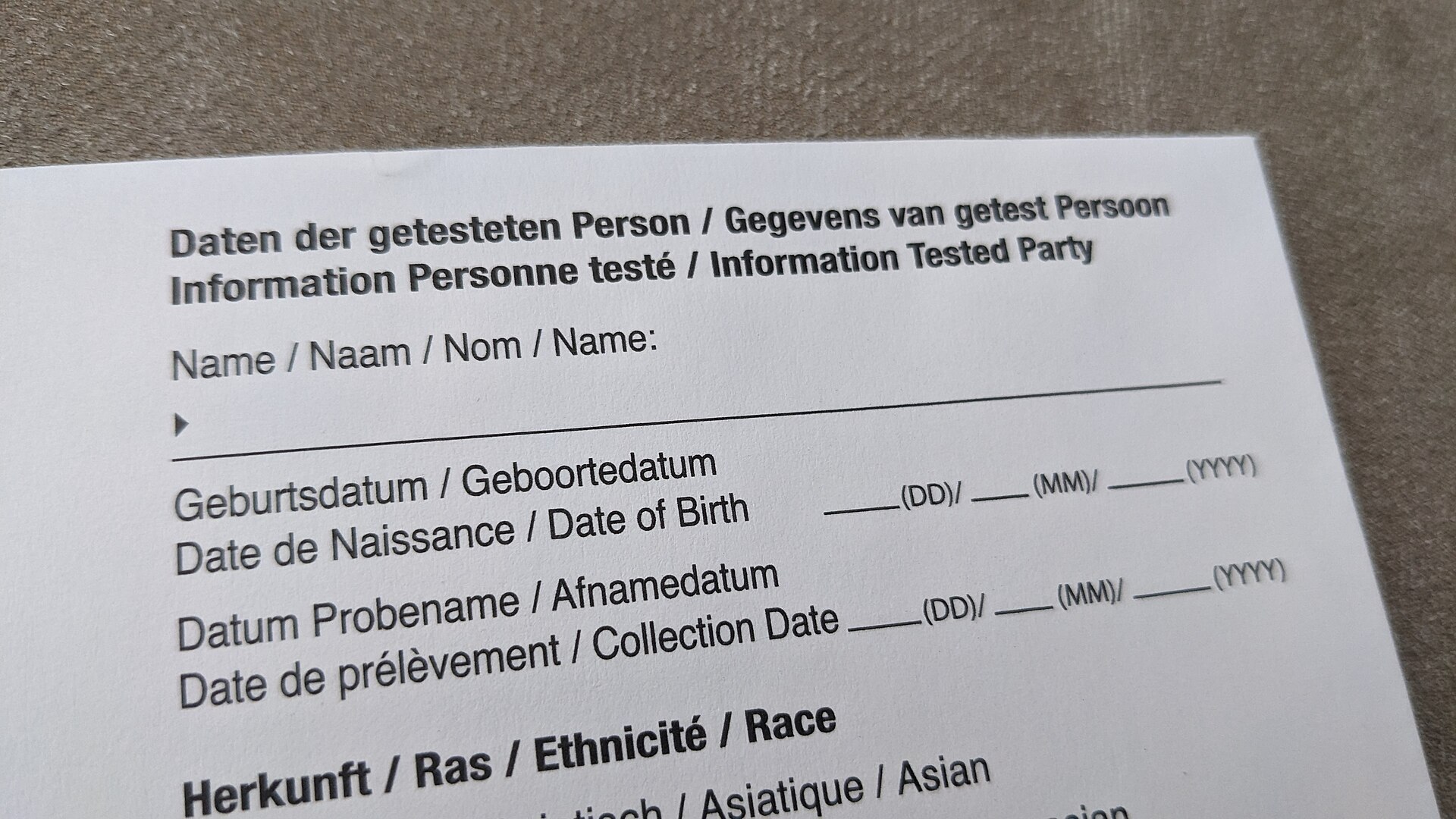
A MAN from Warrington is campaigning for a change in the law, after he was led to believe he was the father of a child that wasn’t his for more than two years.
Ryan Hampson, from Warrington, started working on the campaign earlier this year, following the conviction of his former partner, Beth Fernley, for fraud by false representation in 2025.
Fernley had falsified documents which stated that he was the father of a child that was not his.
Now, Mr Hampson, along with his mum Claire, is taking an active role in trying to change the law so that more men in a similar situation will get justice.
Speaking to the Warrington Guardian, Mr Hampson said: “Mine was one of the only ones [cases] that was successful to get through the justice system and get a result where she was prosecuted.
“There are people out there who are not successful, so I was quite fortunate in that regard, and I don’t want this to happen to anyone else.
“I want to share my story in this campaign to try and make a difference.”
In 2019, Fernley faked DNA results indicating that Mr Hampson, who she had recently separated from, was the father of her unborn child.
She took £300 from Mr Hampson to pay for a “DNA test” and sent him screenshots of the “results” which said there was a 99.9% chance that he was the father.
Mr Hampson’s name was written on the child’s birth certificate by Fernley, and the couple got back together, buying a property in 2020 to live in as a family.
A year later, in April 2021, Fernley told Mr Hampson that she had received a letter from the DNA testing centre, saying that there was an error in the laboratory results, and he was not the father.
In fact, the father was someone she had been unfaithful with while in a relationship with Mr Hampson.
Mr Hampson reported Fernley to the police in July 2022, and she was arrested in August 2023, leading to an investigation which found that no DNA tests had ever been carried out, and all relevant documentation had been forged.
This revelation devastated Mr Hampson, who told the court that his world had been “torn apart” by the news.
Mr Hampson’s mum, Claire, has been a vocal support to her son during this traumatic experience, and is now looking for the law to change to protect others from going through what her son did.
She said: “The whole family was deeply affected.
“It was horrendous seeing Ryan go through this, it took four years of him locking himself away trying to deal with it and rebuild his life.
“I think getting some kind of justice has really helped him in his journey, as someone was held accountable for what they did to him.
“So many victims don’t get the same justice.”
Fernley was given a 13-month prison sentence, suspended for 18 months, for fraud by false representation, due to her falsifying documents claiming that Mr Hampson was the father, and taking money from him to “pay” for the DNA test.
However, Fernley did not receive any punishment for falsely putting his name on the birth certificate as the father of the child, despite admitting to doing so.
This is where Mr Hampson and his mum wish to see a change in the law, to put more robust criminal charges and sentences in place for individuals who lie about the paternity of their child.
The Perjury Act 1911 makes knowingly making a false statement on a public document, such as a birth certificate, illegal.
However, family lawyer Shak Inayat says that for this to be tried in a criminal court, there has to be evidence that the mother of the child “knowingly” wrote the wrong name, and this is almost impossible to prove.
This means that criminal convictions for paternity fraud cases are extremely low, with most cases only ever being treated as a civil matter, if they are investigated at all.
Mr Hampson’s case was one of the few able to be tried in a criminal court because of the evidence surrounding falsified DNA testing.
Without this, it’s unlikely that the case would have ever made it to a criminal court.
Originally published by Warrington Guardian on 4 November 2026